
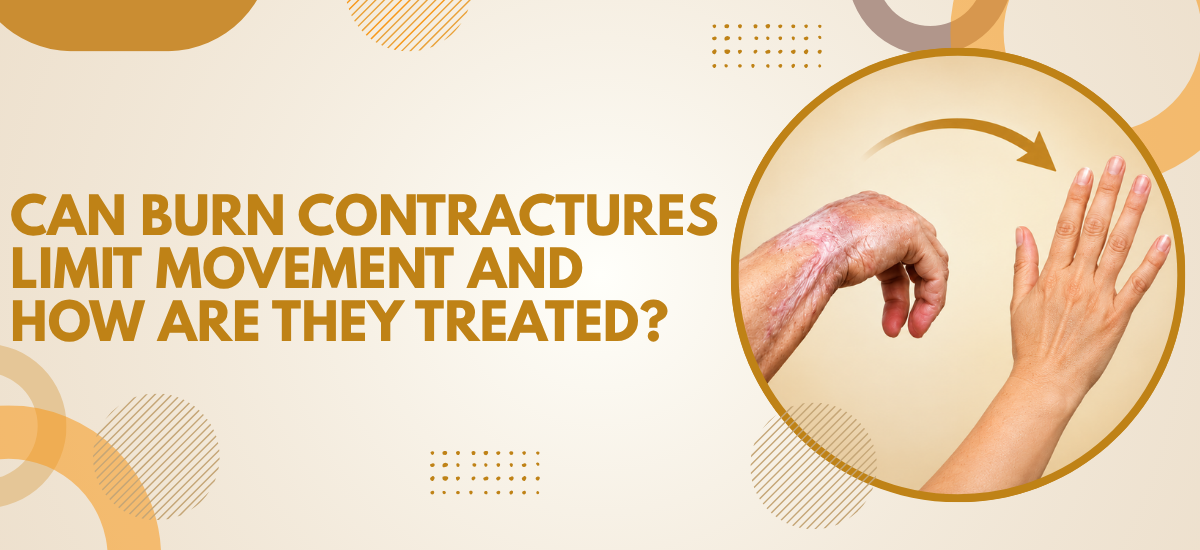
Yes. Burn contractures limit movement, plain and simple. Healing skin tightens, pulls across a joint, and stops doing what normal skin does: stretch. Left alone, that joint can freeze in place. Mild cases need therapy and splinting. Bad ones need surgery.
According to Dr. Monisha Kapoor, plastic surgeon in Delhi, “a contracture doesn’t announce itself overnight, it creeps in over weeks of healing, and that’s exactly the window where stretching and splinting can prevent a surgery later.”
Struggling to fully bend or straighten a joint near an old burn scar? Book a Consultation
How Do Burn Contractures Actually Limit Movement?
Contractures form when scar tissue contracts faster than the joint underneath can adapt. A mismatch in speed. That’s it.
- Joint Location: Neck, elbow, hand? Those lose the most function, because they need a full range of motion just to get through a normal day.
- Scar Maturity: Fresh scars are the aggressive ones. Give it three to six months and the tightening usually settles on its own.
- Depth of Burn: Deeper burns pull harder. Simple as that, and it’s exactly why a flat scar turns into a tight rope of tissue over time.
- Grading: Surgeons grade these on a scale. Mild stiffness on one end, a joint that won’t budge at all on the other.
So does grading matter? It decides whether you need therapy or a scalpel. Most contractures get caught early through routine scar management, long before the joint truly locks up.
What Does Contracture Release Surgery Involve?
Surgical release cuts the tight band and swaps it for tissue that actually stretches. Not glamorous. Works, though.
- Z-Plasty: A zigzag cut, nothing more. It spreads the tension sideways so the scar lengthens without needing a graft at all.
- Skin Grafting: Too big an area to close with local skin? A graft from elsewhere fills the gap instead.
- Flap Coverage: Deep contractures near a joint often need a flap, not a graft. Flaps bring their own blood supply, and that matters when the area has to keep moving.
- Post-Op Splinting: Weeks in a stretched position. Skip this part and the tissue just tightens right back up.
Recovery depends on splinting and therapy as much as the surgery itself. Honestly, more. And patients looking into non-surgical skin tightening usually end up asking exactly where that line with surgical release sits.
Why Choose Dr. Monisha Kapoor?
Dr. Monisha Kapoor is MCh-qualified, plastic and reconstructive surgery, over two decades in. She’s handled enough contracture cases to know when a release is too soon. Not every surgeon does.
Patients get a real plan: therapy, splinting, timing. Not just a date for surgery. Rush the release before the scar’s matured and you’ll likely do it twice. Losing range in a joint near an old burn? Worth a proper look.
📞 Call Now: +91 83739 84777
FAQs
Can physical therapy alone fix a burn contracture?
Mild contractures often improve with therapy and splinting, but severe ones usually need surgery.
How long after a burn does a contracture develop?
Contractures typically develop within the first three to six months of healing.
Can a contracture come back after release surgery?
Yes, without proper splinting and therapy the scar can tighten again.
Do contractures only affect visible scars?
No, contractures can restrict movement even when the scar looks minor.