
Medical Excellence
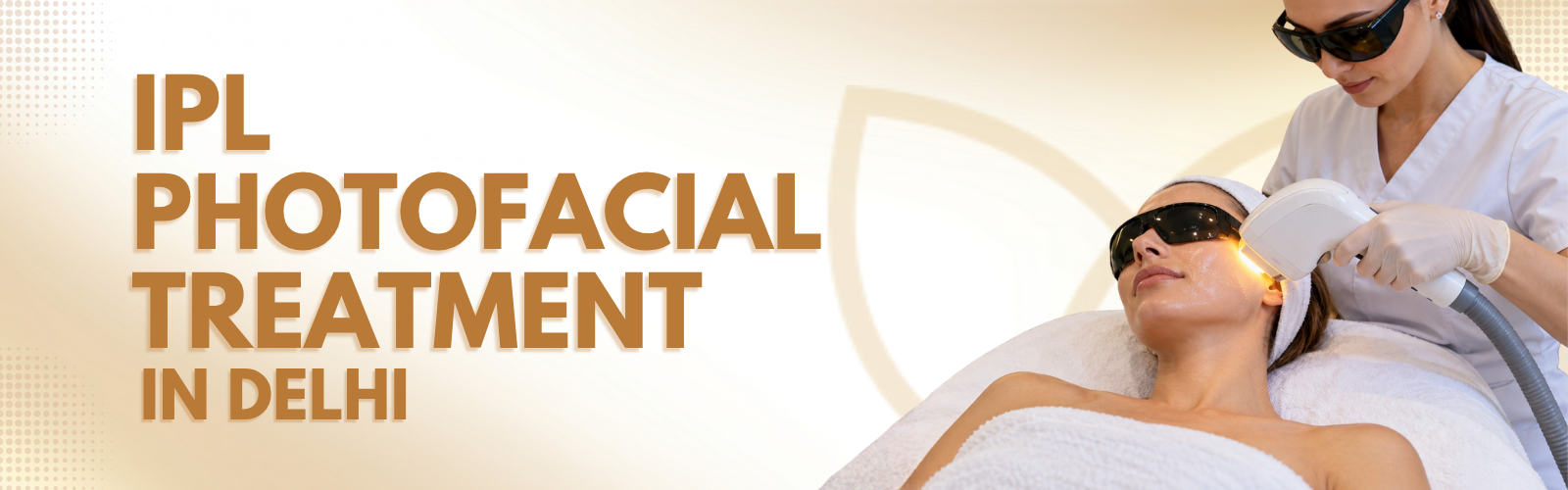
IPL Photofacial Treatment in Delhi
Restore a Clearer, Balanced Complexion
Sun exposure, ageing and environmental damage can gradually lead to brown spots, facial redness and an uneven complexion. IPL photofacial uses controlled pulses of broad-spectrum light to target unwanted pigment and visible blood vessels beneath the skin, helping restore a clearer and more balanced appearance without removing the skin’s surface layer.
According to Dr. Monisha Kapoor, an acclaimed plastic & cosmetic surgeon in Delhi, pigmentation, melasma and vascular redness may look similar but do not respond to light in the same way. Accurate diagnosis, careful skin typing and customised energy settings are particularly important for Indian skin to reduce the risk of unwanted pigment changes.
Dr. Monisha Kapoor brings over 25 years of experience and has performed more than 10,000 procedures, offering personalised IPL Photofacial Treatment in Delhi. Each treatment plan is customised according to the patient’s skin tone, specific concerns and individual response to light-based procedures.
What Is IPL Photofacial?
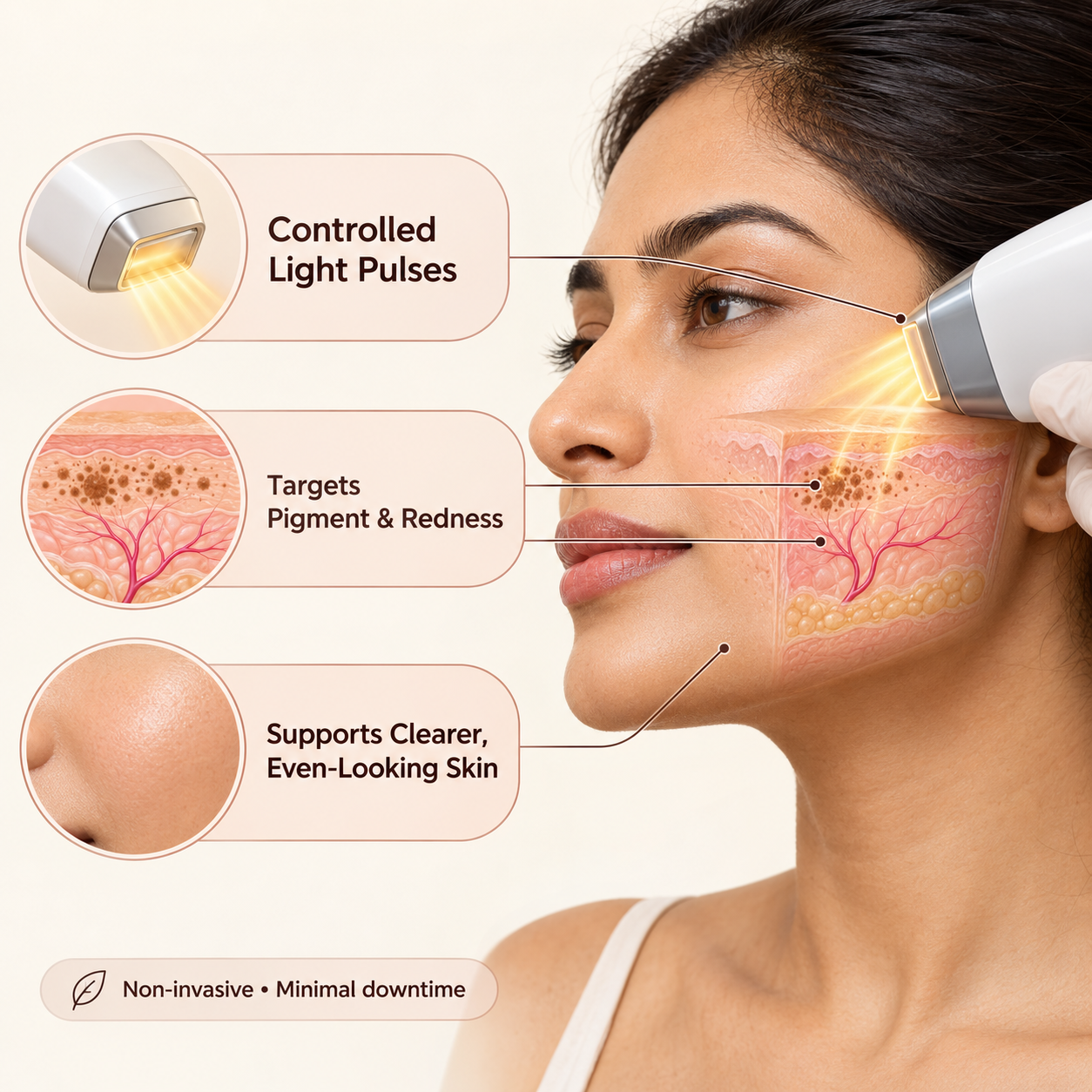
image_0d94ae.jpg
IPL photofacial is a non-invasive skin treatment procedure that uses Intense Pulsed Light. While a laser usually uses only one focused wavelength, IPL uses multiple filtered wavelengths. The selected light is absorbed by colour-producing targets in the skin known as chromophores.
Melanin absorbs light when treating brown spots, while haemoglobin absorbs the light in case of treating redness and small blood vessels. The absorbed light converts into controlled heat, breaking down the unwanted pigment or closing superficial vessels in the skin. The body then gradually clears the treated material.
The filters, pulse and energy levels are selected based on condition being treated, tone and other factors.
A professional skin assessment can determine whether IPL matches your concern.
Get in touch before choosing any light-based procedure. Contact Us Here
What Skin Concerns Can IPL Photofacial Treat?
IPL photofacial may be considered for:
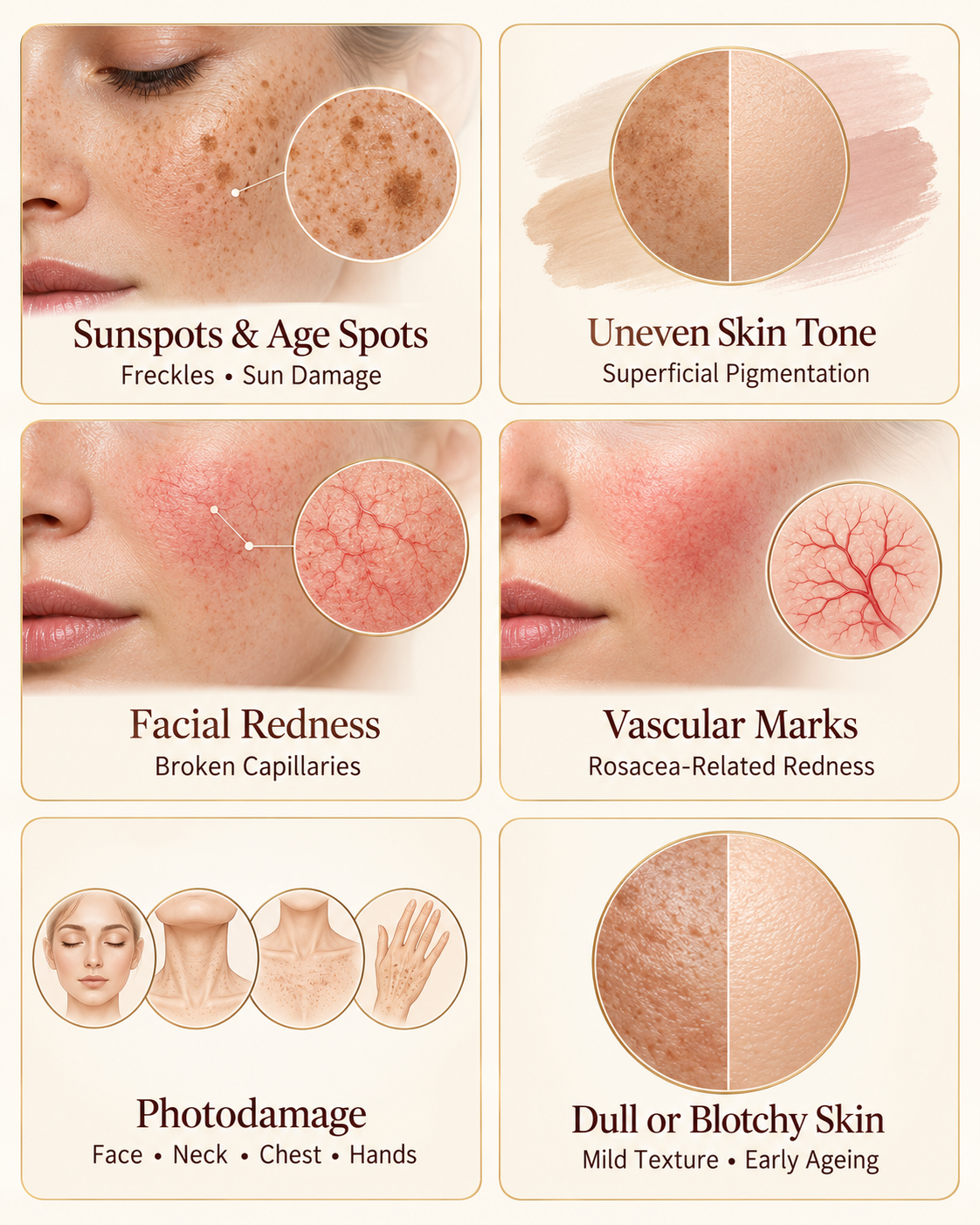
- Not every dark patch is suitable for IPL. Melasma, deeper pigmentation and post-inflammatory pigmentation require cautious assessment because heat or incorrect settings may worsen discolouration.
- Patients primarily concerned about acne, sensitivity or multiple pigmentary conditions can explore other skin treatments in Delhi.
Not sure whether your skin changes warrant professional treatment? Let’s look at the signs that may prompt an assessment.
Signs You May Need IPL Photofacial Treatment
An IPL consultation may be helpful if you notice:
- Brown spots becoming more visible after sun exposure
- Persistent redness across the cheeks or nose
- Small visible facial blood vessels
- Uneven pigmentation that does not improve with skincare
- Blotchy skin on the face, neck, chest or hands
- A combination of brown and red discolouration
- Early photodamage affecting overall skin clarity
Important: These changes do not automatically mean IPL is the correct treatment. A specialist should first identify the type and depth of pigmentation and rule out suspicious skin lesions.
How Does IPL Photofacial Treatment Work?
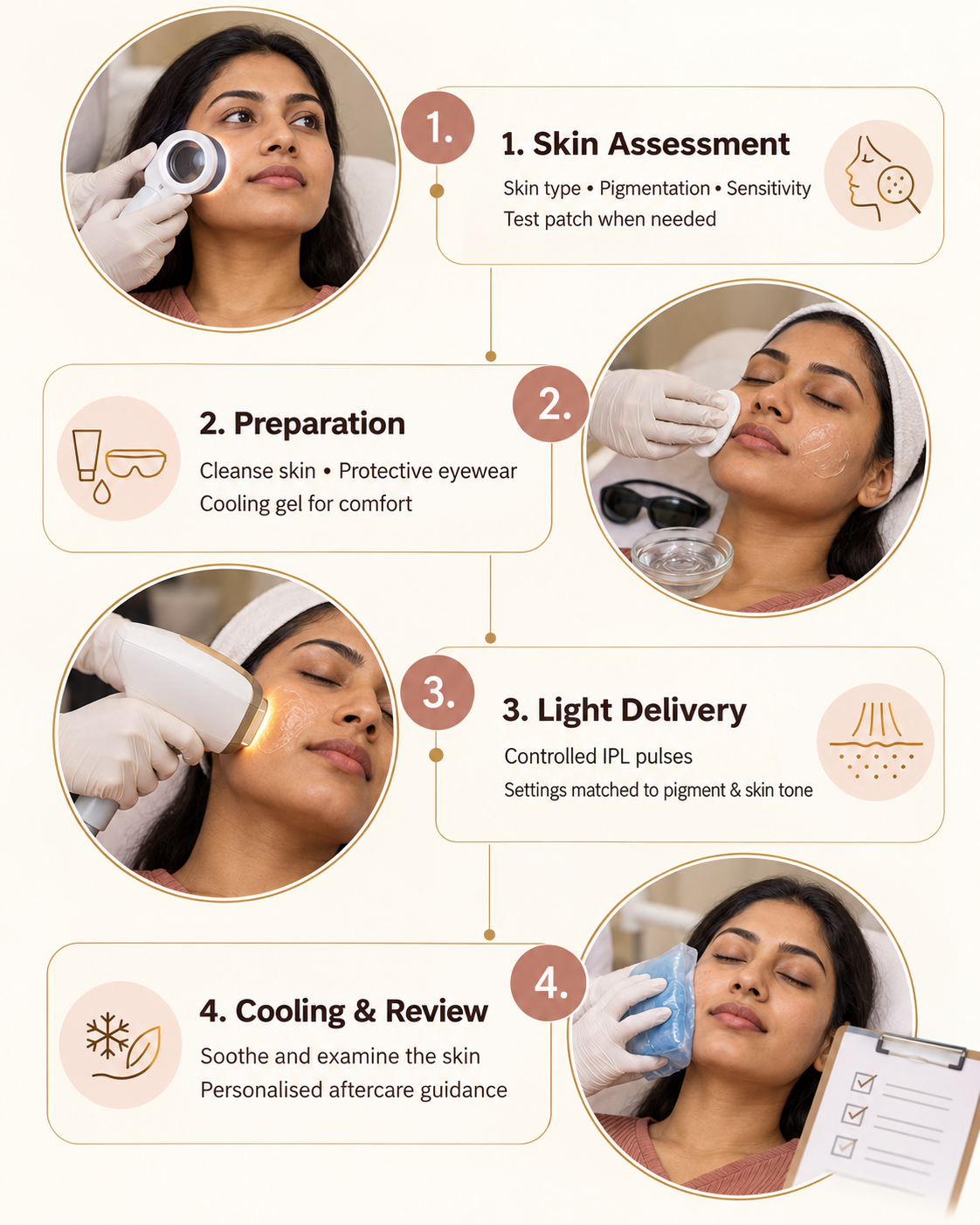
The process usually includes the following steps:
Patients may feel brief warmth or a sensation similar to a light elastic-band snap. Treatment time depends on the size and number of areas.
What Can You Expect After IPL Treatment?
Mild redness, warmth or temporary swelling may occur immediately after treatment. Brown spots can initially appear darker before gradually flaking or fading over the following days. Treated redness may also soften progressively rather than disappearing immediately.
Patients can usually resume routine activities promptly. However, direct sunlight, hot showers, steam, strenuous exercise and irritating skincare may need to be avoided for the period advised by the specialist.
Daily broad-spectrum sunscreen is essential because recently treated skin can be more sensitive to ultraviolet exposure. Picking, rubbing or exfoliating darkened spots should be avoided.
IPL can address several visible concerns in the same session. Let’s review its potential benefits.
Benefits of IPL Photofacial Treatment
Potential benefits include:
- Reduction in visible sunspots
- More even-looking skin tone
- Improvement in facial redness
- Reduced appearance of small blood vessels
- Brighter and clearer-looking skin
- Treatment of multiple concerns at once
- No incisions or surgical anaesthesia
- Minimal interruption to daily activities
- Customisable filters and pulse settings
- Treatment of the face and selected body areas
Results vary according to the concern, pigment depth, skin type, sun exposure and treatment settings. IPL cannot stop future pigmentation or replace daily sun protection.
Choose IPL only after confirming the nature of your skin concern. A personalised assessment can help set realistic expectations.
Why Choose Lumenis OPT IPL Technology?
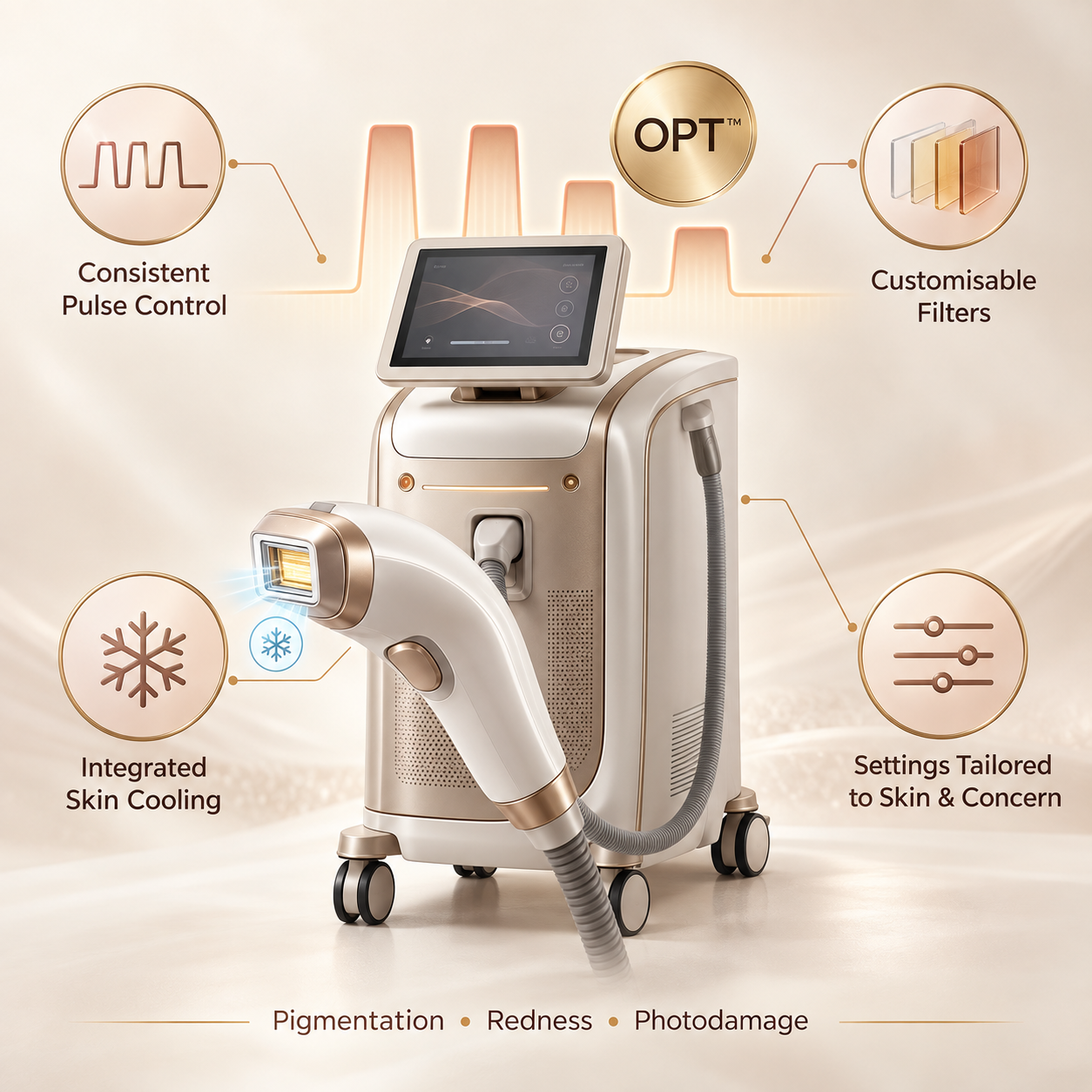
Lumenis OPT stands for Optimal Pulse Technology. It allows the practitioner to control the pulse shape and distribute energy consistently throughout each pulse.
Controlled Energy Delivery
OPT helps maintain consistent energy across the pulse.
Customisable Filters
Selected wavelength ranges can be used for different pigmentary and vascular targets.
Adjustable Parameters
Fluence, pulse duration and delay can be modified according to skin type and concern.
Integrated Cooling & Applications
Cooling supports comfort and helps protect the skin’s surface. The technology can address selected brown spots, redness and photodamage.
The official Lumenis IPL technology guide explains how filters and OPT pulse control allow treatment parameters to be adapted for different indications. The technology does not replace clinical judgement. Correct diagnosis and conservative settings remain essential, particularly for melanin-rich skin.
How Many IPL Sessions Will You Need?
The number of sessions depends on the type, depth and extent of the concern. Some superficial spots may respond within a few treatments, while widespread redness or photodamage may require a longer course.
Treatments are usually spaced several weeks apart to allow the skin to recover and the response to be assessed. Maintenance may be considered if pigmentation or redness returns because of sun exposure, hormonal changes or ageing.
Dr. Monisha Kapoor determines the schedule after examining the skin instead of prescribing a standard package. Progress is reviewed before further sessions are advised.
Indian skin requires careful light selection because it contains more active melanin. Let’s discuss how treatment safety is assessed.
Is IPL Safe for Indian Skin?
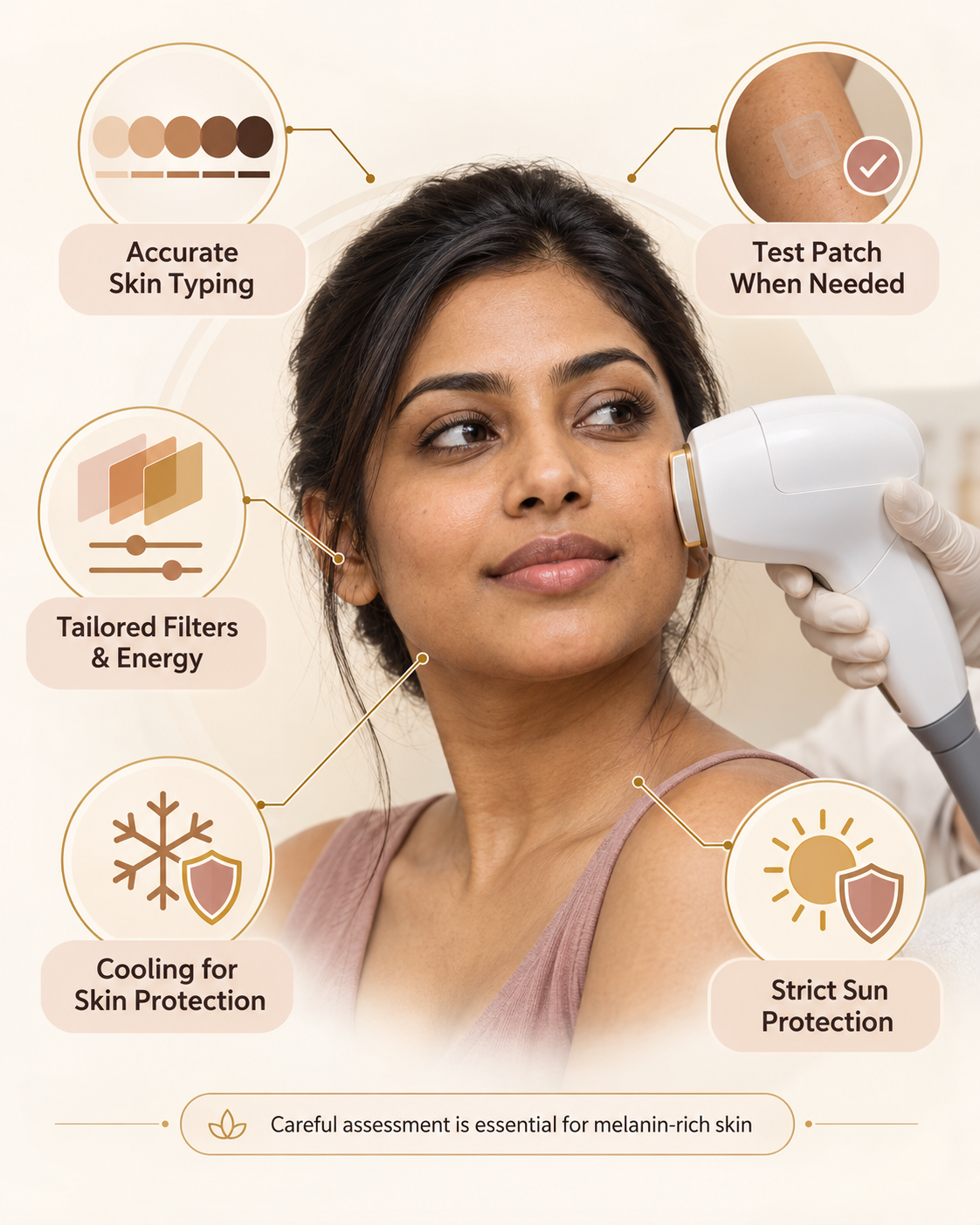
IPL may be used on selected Indian skin tones, but it must be planned carefully. Because the device targets pigment, naturally higher melanin levels can also absorb the light. Excessive energy may lead to burns, temporary darkening or lightening of the skin.
Safety measures may include:
- Accurate Fitzpatrick skin typing
- Assessment for recent tanning
- A test patch when appropriate
- Suitable wavelength filters
- Conservative starting parameters
- Adequate cooling
- Strict sun protection
- Gradual adjustment according to response
IPL may not be recommended for every deeper skin tone or pigmentary condition. Treatment may also be postponed during active infection, recent tanning or the use of certain photosensitising medicines.
Unsure which skin treatment suits you best? Let’s compare IPL Photofacial with other options for effective skin rejuvenation.
IPL Photofacial vs Other Skin Treatments
The right procedure depends on whether the main concern involves pigment, blood vessels, texture or deeper structural changes.
| Treatment | Main Purpose | Commonly Considered For |
|---|---|---|
| IPL Photofacial | Broad-spectrum light treatment | Sunspots, redness and mixed discolouration |
| Laser Toning | Targeted laser energy | Selected pigmentation and uneven tone |
| Chemical Peel | Controlled surface exfoliation | Dullness, superficial marks and rough texture |
| Microneedling | Controlled micro-injuries | Acne scars and textural irregularities |
| Radiofrequency | Controlled tissue heating | Mild laxity and skin firmness |
| Medical Skincare | Daily corrective ingredients | Acne, pigmentation and long-term maintenance |
IPL is particularly useful when brown and red concerns appear together. It may be combined with medical skincare or another procedure when multiple skin layers are involved, but treatments should be coordinated carefully.
Seeking expert-guided IPL treatment in Delhi? Learn how Dr. Monisha Kapoor’s personalised approach supports effective and skin-focused rejuvenation.
Clinic Excellence
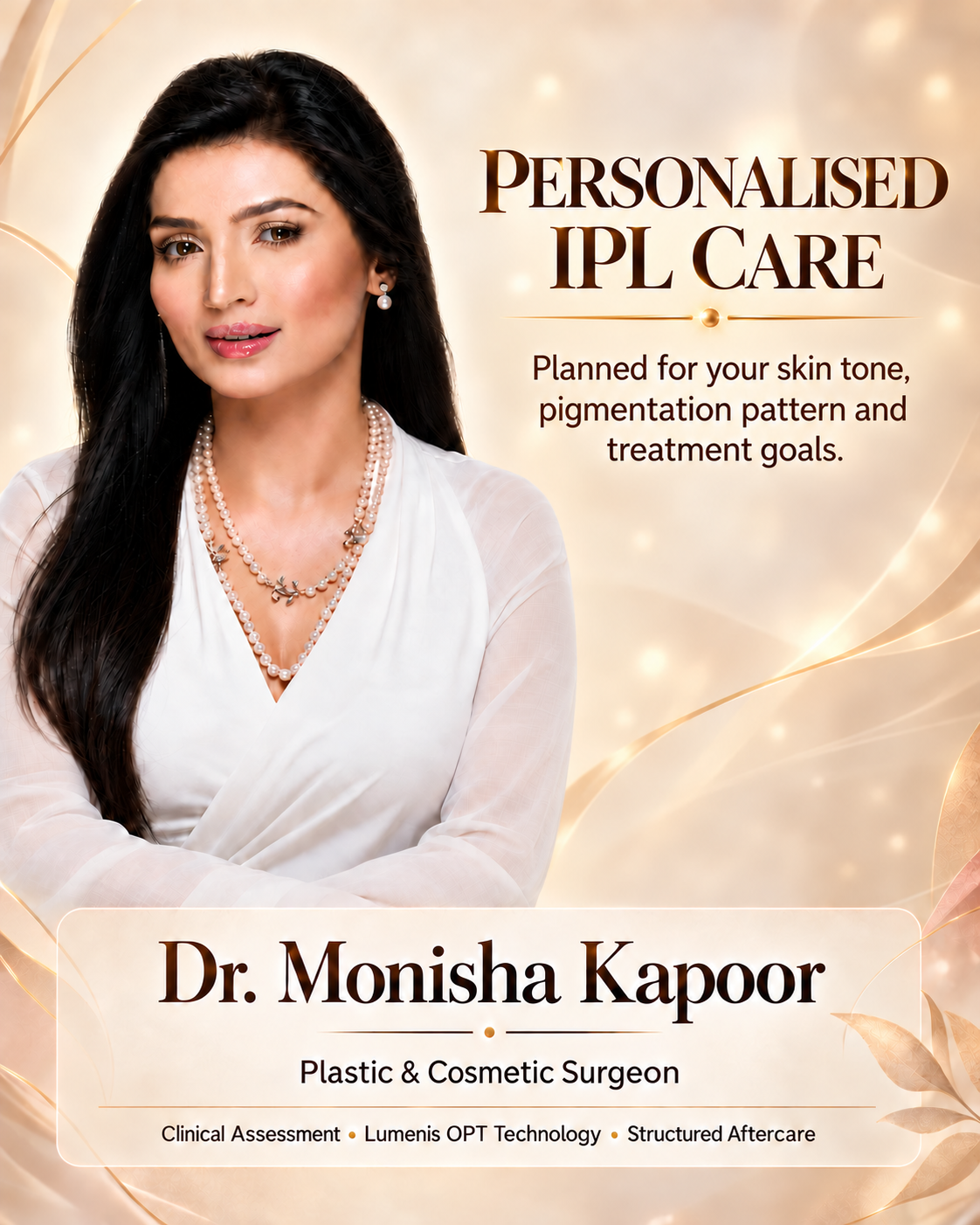
Why Choose Dr. Monisha Kapoor for IPL Treatment?
Seeking expert-guided IPL treatment in Delhi? Learn how Dr. Monisha Kapoor’s personalised approach supports effective and skin-focused rejuvenation.
Ready to revitalise your skin?
Get a personalised IPL treatment plan based on your skin concern and goals. Reach out to discuss suitable options, expected results and aftercare guidance.
FAQs
1. Is there downtime after an IPL photofacial?
Downtime is usually minimal. Mild redness, warmth, swelling or temporary darkening of spots can occur.
2. What is the cost of IPL Photofacial Treatment in Delhi?
The cost depends on the treatment area, technology used, and the number of sessions required. A personalised estimate is provided after skin assessment.
3. Can I wear makeup after IPL?
Makeup may be used when the skin is comfortable and intact, subject to the expert’s advice. Avoid applying products over blistered or irritated skin.
4. How long do IPL results last?
Results vary. Sun protection and suitable skincare may help preserve improvement, although new pigmentation and redness can develop over time.
5. Is IPL the same as laser treatment?
No. IPL delivers a filtered range of wavelengths, while a laser typically emits a single wavelength for more selective targeting.
Disclaimer: The information shared in this content is for educational purposes and not for promotional use.