
Laser Hair Reduction in Delhi
Shaving, waxing and threading can result in frequent growth, irritation of skin, ingrown hairs, and inconvenience of regular salon visits. However, laser hair reduction is a better option as it targets the active hair follicles, resulting in reduced density, growth rate, thickness of hair in any area of the face or body.
As per Dr. Monisha Kapoor, an ace plastic & cosmetic surgeon in Delhi, Laser hair reduction involves more than just selection of a suitable laser according to the colour of your skin. Thickness of hair, follicle depth, treatment area, growth cycle, hormonal influences, etc. all affect the response, making personalised parameter selection essential.
If you are looking for laser hair reduction in Delhi, Dr. Monisha Kapoor will provide customized solutions as per the area you wish to reduce at the Aesthetics Clinic. The treatment can be focused on reducing coarse facial hair, beard contouring, ingrown hair or simply removal of body hair.
Looking for a structured alternative to frequent hair removal? Let’s understand how advanced laser treatment supports gradual reduction.
Advanced Laser Hair Reduction Treatment for Smooth, Hair-Free Skin
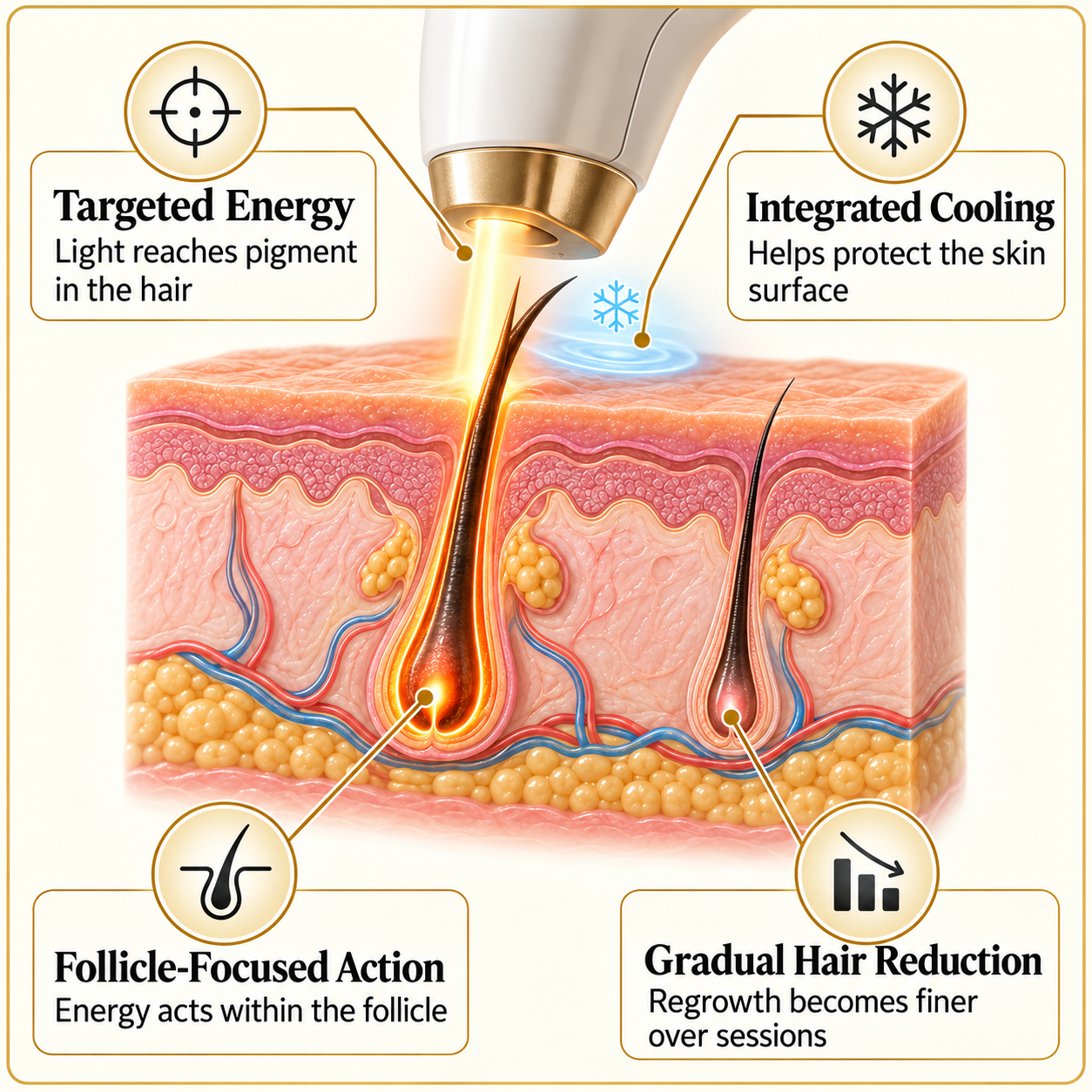
Laser hair reduction works by reducing the number, thickness and rate of growth of the unwanted hair during a scheduled series of treatment sessions. It directs laser energy to melanin pigment, which is present in the hair and the follicle.
The energy from the laser gets absorbed by the melanin and turns into heat; hence the capability of the follicle to generate hair gets impaired. It is effective only if the follicle is in the active growth phase and this is the reason why this process does not treat all hairs during one session.
“Hair reduction” rather than “permanent hair removal” better defines this process. Some of the treated hairs may cease to grow, while some will grow again thinner or lighter.
Long-term hair reduction begins with suitable technology and carefully selected settings.
Speak with a specialist to explore a treatment plan tailored to your needs.
How does the laser distinguish dark hair from the surrounding skin? Let’s look at the science behind the treatment.
What Is Laser Hair Reduction and How Does It Work?
Laser hair reduction works through selective photothermolysis. This means the laser uses a suitable wavelength to target pigment within the hair while limiting heat exposure to the surrounding skin.
Laser hair removal includes the following stages:
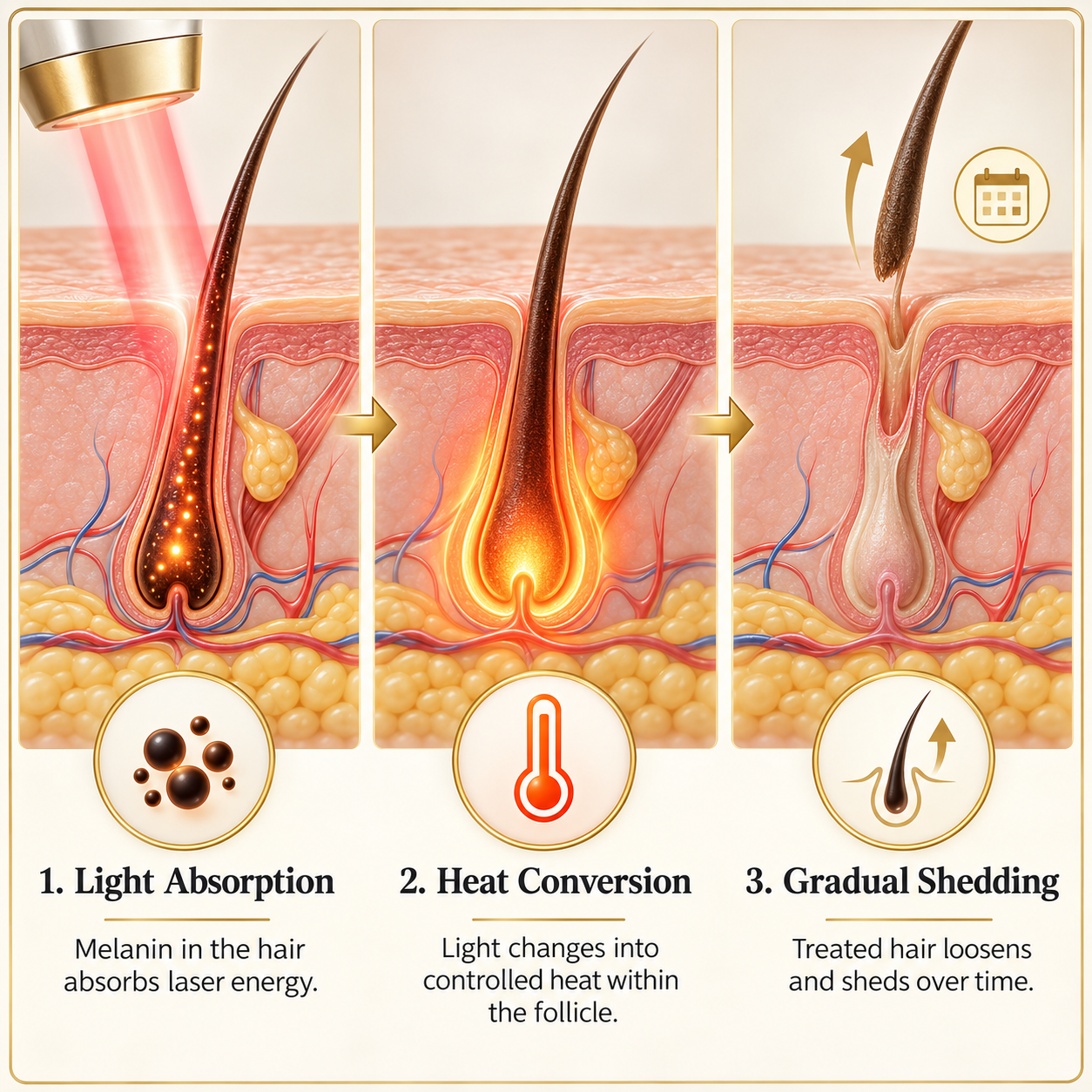
Hair follicles undergo various phases in their development. It is important that laser treatment takes place when the hair is in its anagen or growth phase since hair is still connected to the follicle.
Unwanted hair can affect both small facial areas and larger body regions. Here are the areas commonly considered for treatment.
Areas Treated with Laser Hair Reduction
Laser hair reduction can be performed on many facial and body areas, including:
Facial Areas
- Upper lip
- Chin
- Jawline
- Sideburns
- Cheeks
- Forehead and hairline
- Neck
- Beard shaping for men
Upper Body
- Underarms
- Arms and forearms
- Shoulders
- Chest
- Abdomen
- Upper and lower back
Lower Body
- Bikini line
- Brazilian area
- Buttocks
- Thighs
- Lower legs
- Feet and toes
The laser should not be applied directly over the eyelids, active infections, open wounds or tattoos. Facial hair linked to hormonal concerns may also require medical evaluation because laser treatment reduces existing growth but does not treat the hormonal cause.
How does laser reduction compare with shaving, waxing and threading? Let’s review its practical advantages.
Benefits of Choosing Laser Hair Reduction Over Traditional Hair Removal Methods
Laser hair reduction offers several potential advantages:
- Longer-lasting reduction in unwanted hair
- Slower and finer regrowth
- Fewer waxing or threading appointments
- Reduced risk of shaving cuts
- Less repeated pulling of the skin
- Improvement in selected ingrown hairs
- Treatment of both small and large areas
- More precise beard or hairline shaping
- Reduced dependence on temporary methods
- Customisable settings for different skin tones
- Short treatment sessions for smaller areas
- Minimal interruption to daily activities
Unlike shaving, laser treatment targets the follicle rather than cutting hair at the surface. Unlike waxing and threading, it does not pull the hair from the skin during each session.
Laser treatment does not guarantee that all hair will disappear permanently. Fine, light, grey, white or red hair may respond poorly because it contains little melanin.
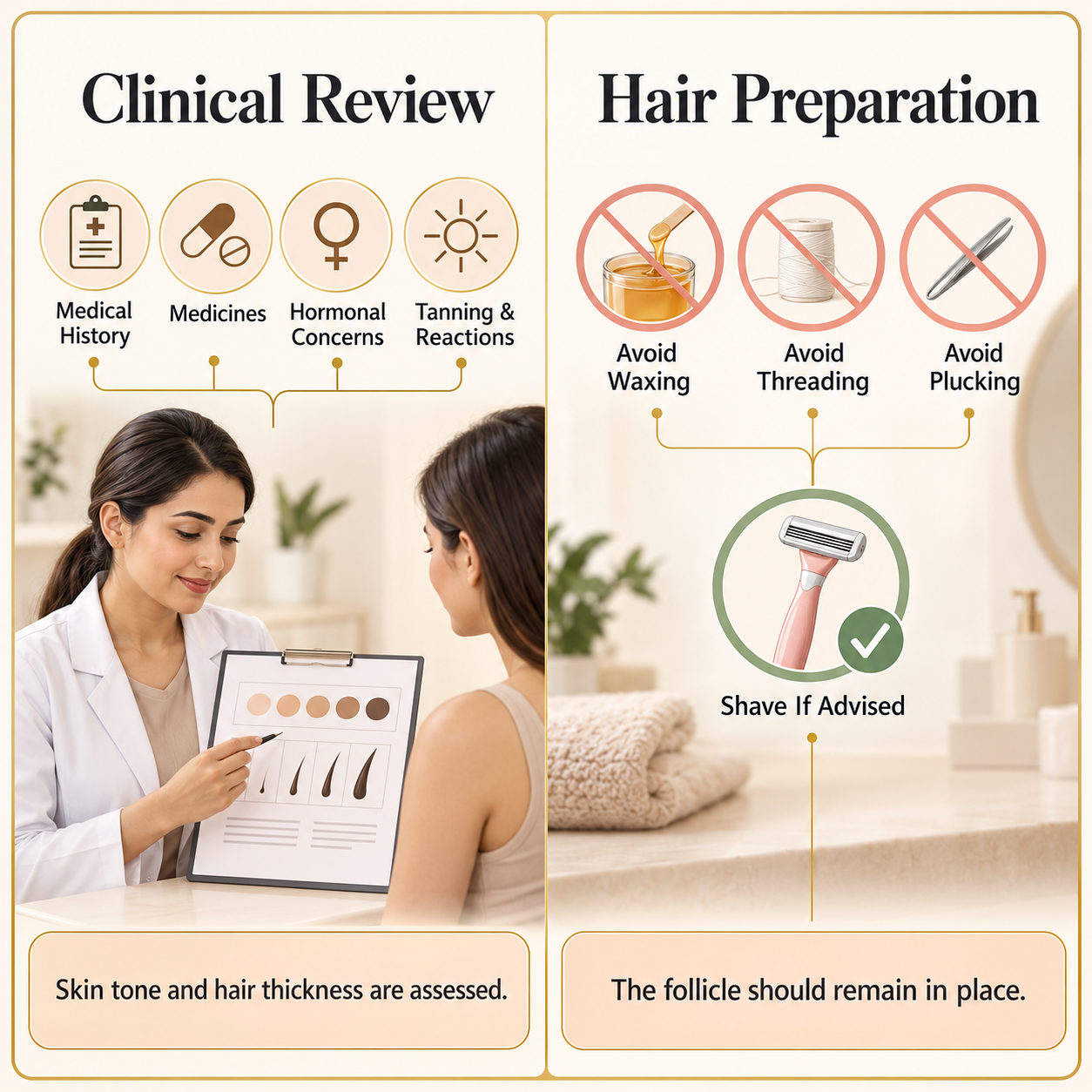
Knowing how to prepare can improve comfort and reduce avoidable reactions. Here is what usually happens during a session.
What to Expect During a Laser Hair Reduction Procedure?
Before Treatment
During Treatment
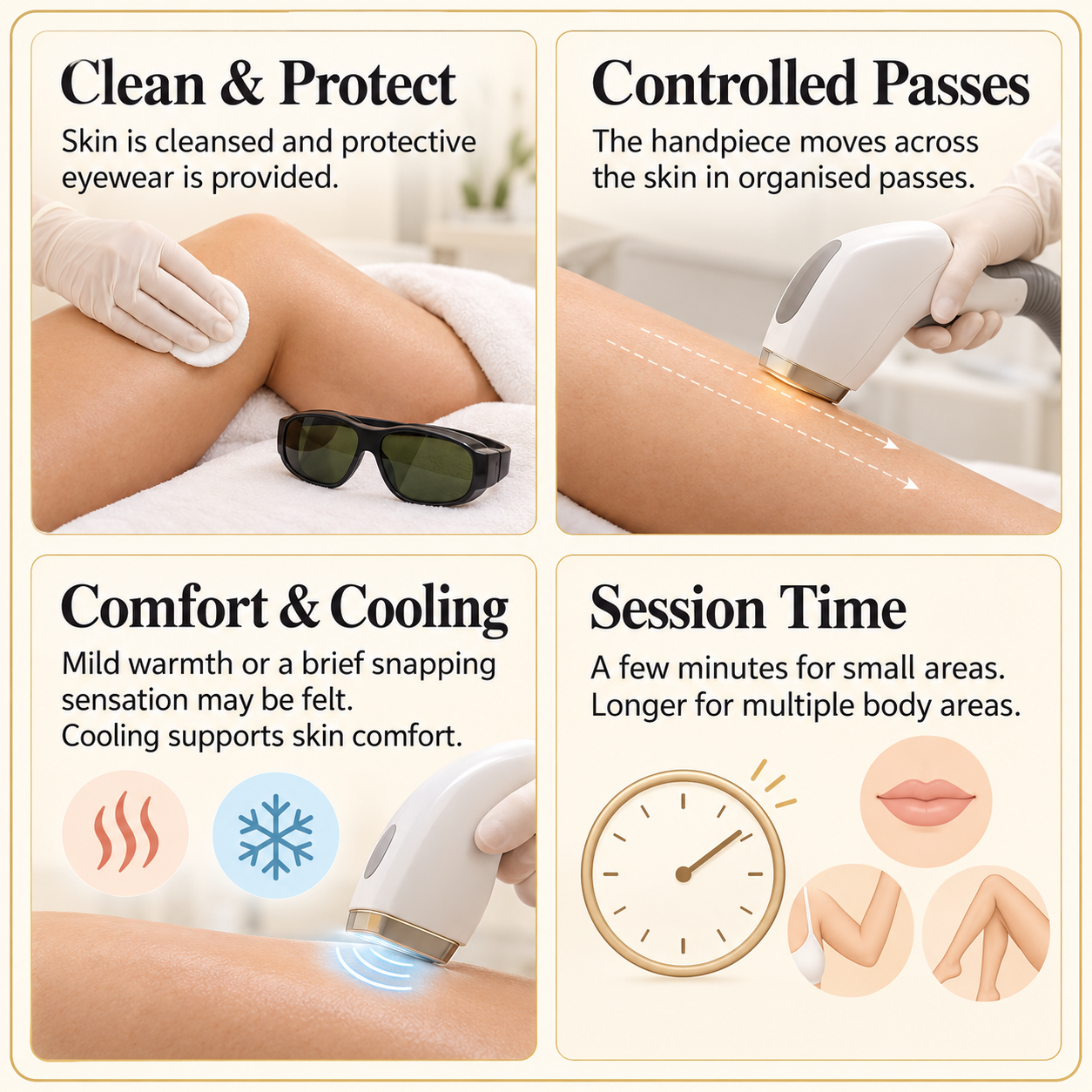
After Treatment
Temporary redness, warmth or small bumps around the follicles can occur. These effects usually settle gradually. Patients should avoid rubbing, excessive heat and direct sun exposure as advised.
Treated hairs begin shedding rather than falling out immediately. They should not be pulled or waxed between sessions.
Laser Hair Reduction Results, Sessions Required and Recovery
A majority of individuals need more than one session since not all hair follicles are active during one session. The frequency and length of sessions are determined by the body area, hair cycle, follicle density, skin type and hormonal factors.
Facial hair may require closer monitoring because it is influenced by polycystic ovary syndrome, thyroid dysfunction, or other hormonal factors. Body hair may have different growth cycle compared to that of the face and may need longer intervals between treatments.
When a treatment period is over, some maintenance sessions may be needed for new or returning growth. Effects of laser hair reduction are influenced by:
- Hair colour and thickness
- Natural skin tone
- Treatment area
- Hormonal conditions
- Medicines
- Laser wavelength and settings
- Session consistency
- Previous hair removal methods
Post-treatment recovery is generally brief. Use the recommended sunscreen and soothing products. Report any blisters, severe pain, and persistent pigment changes.
Laser treatment works better for some hair types than others. Let’s see who may be an appropriate candidate.
Who Is an Ideal Candidate for Laser Hair Reduction?
A suitable candidate generally has unwanted dark or coarse hair and wants hair reduction that will last longer rather than complete hair removal permanently. Modern laser systems may be applied to any skin tone, when the wavelength and settings are selected carefully.
It is not recommended to start laser hair reduction treatment in individuals who have:
- Recent tanning or sunburn
- Active skin infection
- Open cuts or wounds
- Photosensitising medicines
- Uncontrolled skin inflammation
- Pregnancy, based on clinical advice
- Tattoos over the treatment area
- Unrealistic expectations
Grey, white, light blonde, and some red hair may yield poor results due to low levels of melanin pigmentation. Also, fine facial hair should be carefully evaluated before treatment since it can be stimulated by the wrong application.
Laser Hair Reduction Cost in Delhi: Factors That Affect Pricing
The cost of laser hair reduction in Delhi depends on the treatment plan rather than one fixed rate. Pricing may be influenced by:
- Size of the treatment area
- Facial, body or full-body treatment
- Hair thickness and density
- Number of sessions required
- Laser technology used
- Skin tone and required settings
- Hormonal hair growth
- Treatment of multiple areas
- Maintenance requirements
- Previous treatment response
A small area such as the upper lip requires less time than the back, legs or full body. Patients with dense growth may also need a different number of sessions from those with scattered hair.
An assessment-based estimate provides a more realistic understanding of the total treatment course than comparing only individual session prices.

Safe hair reduction depends on correct skin typing and parameter selection. Discover how Dr. Monisha Kapoor plans treatment.
Why Choose Dr. Monisha Kapoor for Laser Hair Reduction in Delhi?
25+ Years of Experience
Her practice covers plastic surgery, cosmetic procedures and non-surgical aesthetic care, supporting careful clinical decision-making.
10,000+ Procedures Performed
Extensive procedural experience supports informed laser selection and management of different skin responses.
Conservative Parameter Selection
Energy and pulse settings are adjusted according to skin tone and response rather than using one standard level.
Area-Specific Treatment Strategy
The face, beard, underarms, bikini region, arms, legs and back are treated according to their different hair cycles and skin sensitivities.
Focus on Skin Safety
Patch testing may be recommended for sensitive, darker or reactive skin to assess its response before treating a larger area.
Care for Ingrown Hair and Razor Bumps
Treatment may also help reduce recurring follicular irritation associated with frequent shaving, waxing or threading.
Growth-Cycle Scheduling
Appointment intervals are selected according to the biological growth pattern of the treatment area rather than a fixed calendar.
Structured Follow-Up and Aftercare
Skin response and hair reduction are reviewed across sessions, allowing treatment settings and intervals to be modified when required.
Ready to reduce unwanted hair and the inconvenience of frequent removal?
Frequently Asked Questions
It offers long-lasting hair reduction as opposed to permanent hair removal. There might still be regrowth of some hair, which is thinner or needs maintenance.
There is usually a mild warmth or snapping feeling experienced by most people during the process.
It can be done safely when a suitable wavelength and low settings are selected for the patient’s skin type.
Rarely, unsuitable laser hair reduction treatment on fine facial hair might lead to stimulation of hair growth.
Laser hair reduction can help with recurring ingrown hairs by decreasing the number and thickness of hair growth.
Yes, but due to underlying hormonal conditions, there can still be new hair growth.
The cost is based on the area of the body, hair density, technology used, and the number of sessions required.