
Tattoo Removal in Delhi
A tattoo may lose its relevance because of changing preferences, professional requirements, an outdated design or an unsatisfactory result. Modern laser tattoo removal offers a controlled way to gradually fade unwanted ink by breaking pigment into smaller particles that the body can clear naturally, without surgically removing the surrounding skin.
According to Dr. Monisha Kapoor, an eminent cosmetic & plastic surgeon in Delhi, tattoo removal cannot follow a standard protocol because every ink behaves differently. The tattoo’s colour, depth, density, age and location, along with the patient’s skin tone and healing pattern, determine the laser wavelength, treatment intensity and number of sessions required.
At Aesthetics Clinic, led by Dr. Monisha Kapoor, tattoo removal in Delhi is planned as a progressive treatment programme rather than an aggressive one-session procedure. Each appointment is guided by the tattoo’s fading pattern and the skin’s recovery, helping balance visible ink reduction with careful protection of the surrounding tissue.
Want to know how modern laser technology targets tattoo ink? Let’s understand the treatment approach.
Advanced Laser Tattoo Removal Treatment for Safe & Effective Results
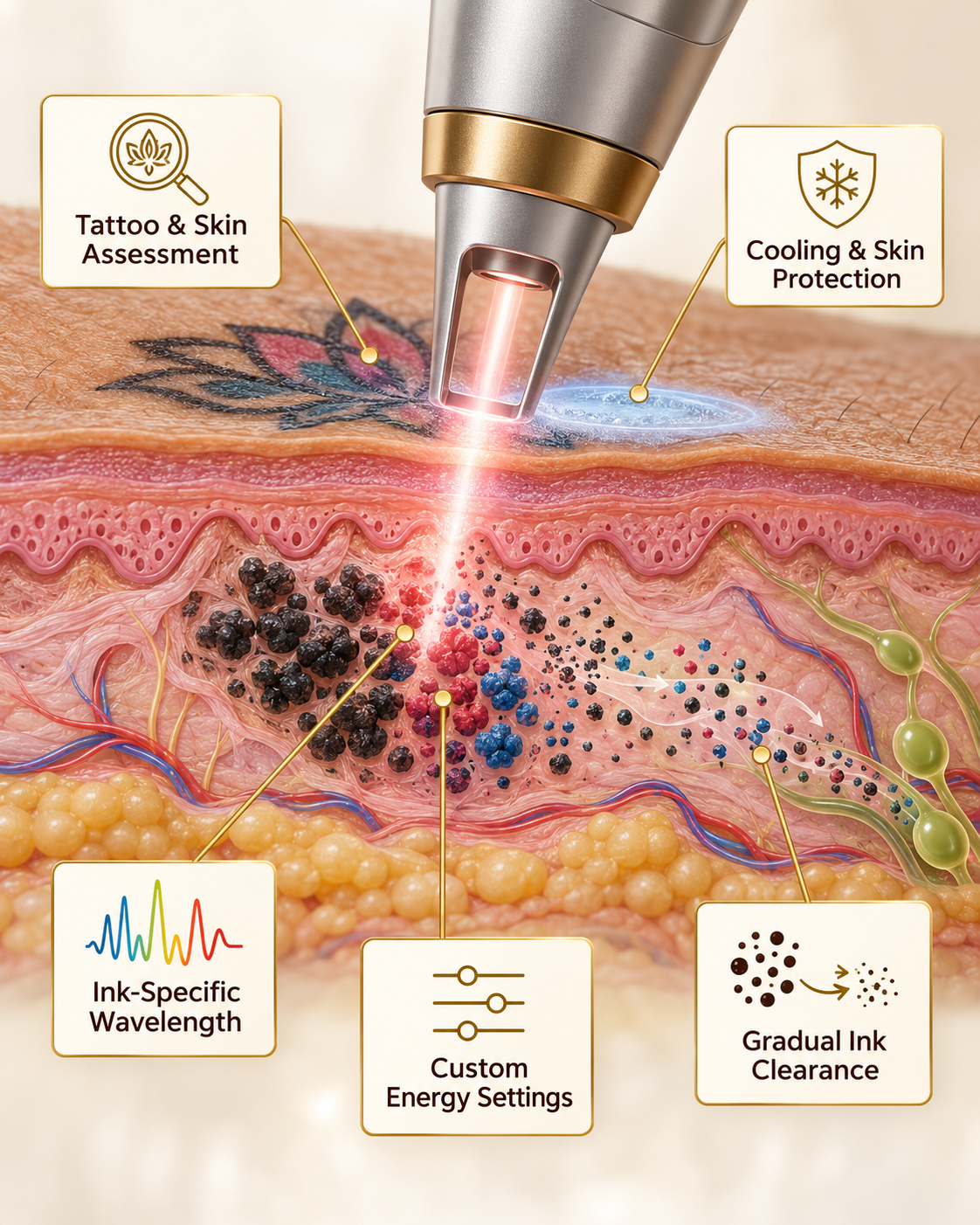
During advanced tattoo removal, short, controlled pulses of laser energy are delivered into the tattoo pigment. Depending on the colour of the ink, various wavelengths are absorbed. This makes the selection of the right wavelength vital both from the standpoint of treatment efficacy and skin safety.
The aim is not to remove the tattoo during one aggressive session. The process is gradual so that the body has enough time to clear the fragmented pigments and allow the skin to recover in between the sessions. This approach also contributes to the reduction of unnecessary heat exposure and the risk of scarring or pigment changes.
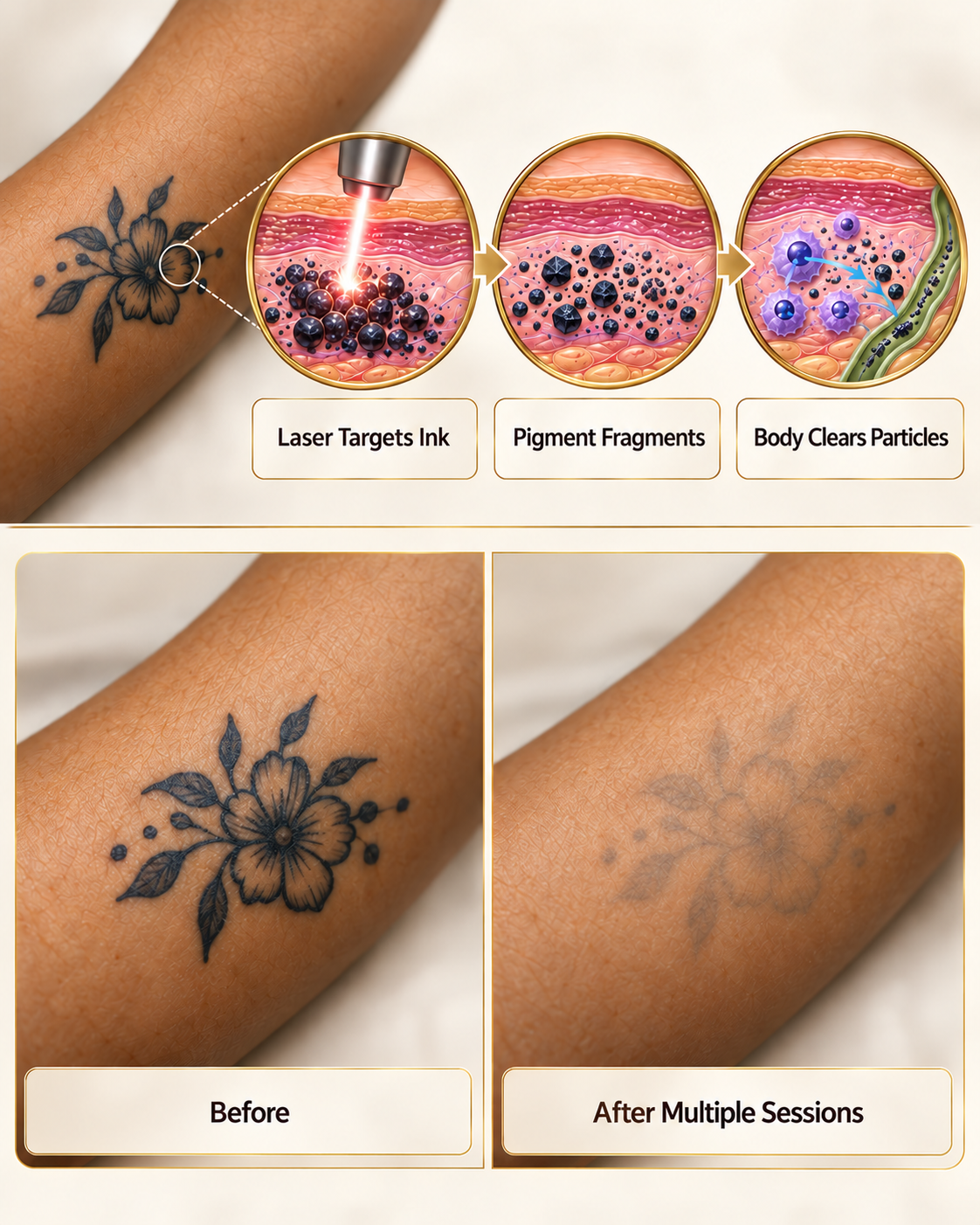
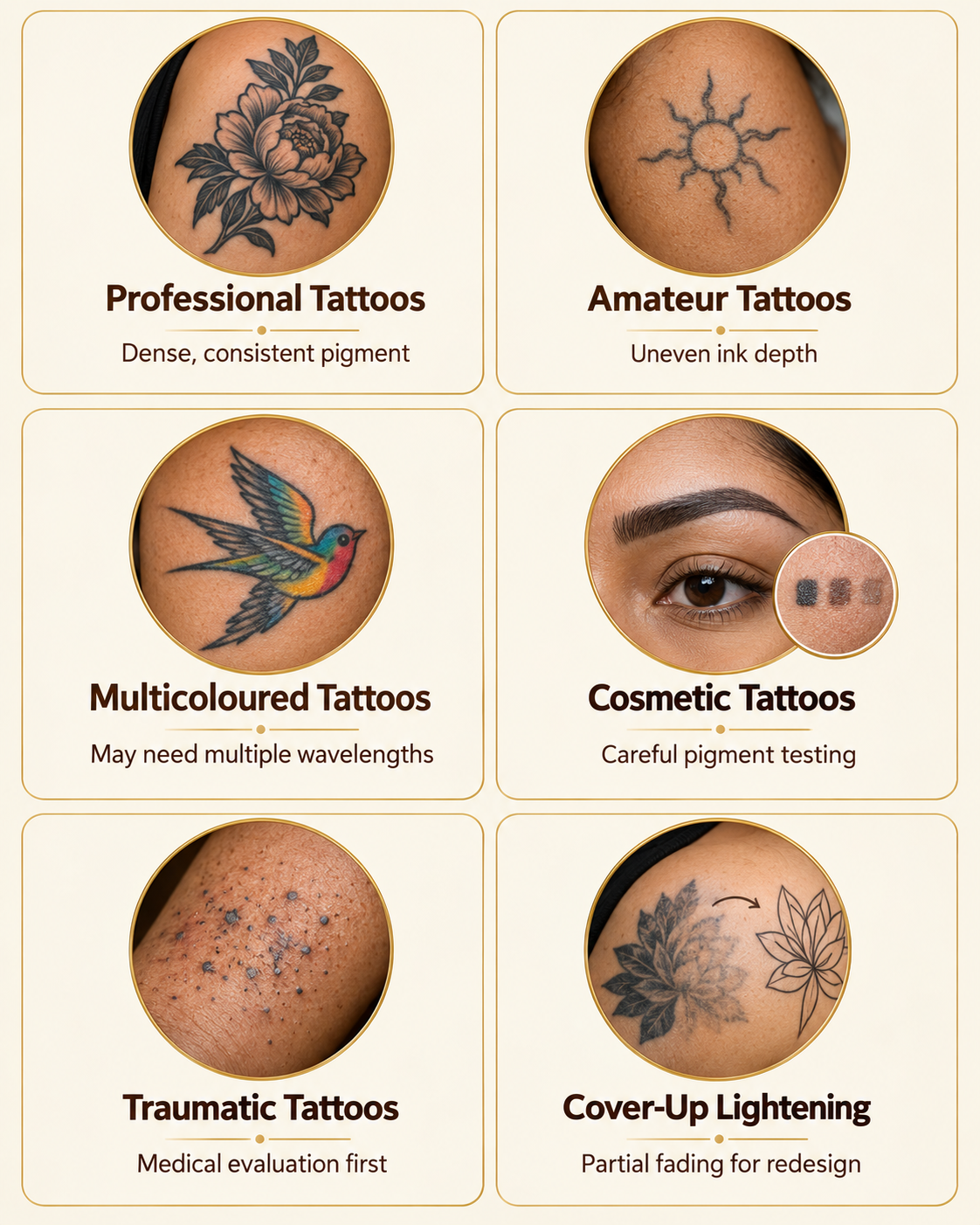
Professional tattoos generally have dense, deeply placed ink, while amateur tattoos may be lighter and more unevenly positioned. Each tattoo therefore requires individual evaluation rather than standard device settings.
Take the first step towards tattoo removal with a detailed skin and tattoo assessment. Get guidance on suitable treatment options and the expected fading process.
How Does Laser Tattoo Removal Work?
Tattoo ink remains visible because pigment particles are too large for the body to remove easily. During laser treatment, a wavelength attracted to the ink colour delivers rapid energy into these particles.
The pigment absorbs the energy and breaks into smaller fragments. Over the following weeks, the body’s natural immune and lymphatic processes gradually clear some of these fragments. The tattoo then becomes lighter across successive sessions.
Several principles guide this process:
- Dark inks usually absorb certain wavelengths more readily.
- Coloured inks may require different wavelengths.
- Larger or denser tattoos need more treatment passes over time.
- Adequate intervals allow pigment clearance and skin recovery.
- Settings must be adjusted for melanin-rich skin to reduce complications.
The surrounding skin is not physically removed. However, temporary swelling, redness, pinpoint bleeding, crusting or blistering can occur as part of the treatment response.
Different tattoos respond differently to laser energy. Here are the types that may be considered for treatment.
Types of Tattoos That Can Be Removed with Laser Treatment
Laser treatment may be used for:
- Black ink tattoos
- Coloured tattoos
- Professional tattoos
- Amateur tattoos
- Small tattoos
- Large tattoos
- Old or faded tattoos
- Tattoos to be lightened before a cover-up
Laser treatment offers a more controlled approach than abrasive or chemical methods. Let’s review its potential advantages.
Benefits of Choosing Laser Tattoo Removal in Delhi
Potential benefits of laser tattoo removal include:
- Gradual fading of unwanted tattoo ink
- No surgical incision in most cases
- Treatment settings selected for individual ink colours
- Ability to treat both professional and amateur tattoos
- Option to lighten a tattoo before a cover-up
- Limited effect on surrounding tissue when correctly performed
- Treatment of small or large tattoos
- Planned sessions with recovery intervals
- Minimal interruption to routine activities
- Personalised aftercare based on skin response
Results differ between patients, and complete removal cannot be guaranteed. Certain pigments may remain visible, and the treated area may show a faint outline or colour difference after the final session.
Knowing what happens at each appointment can make treatment easier to plan. Here is what you can expect.
What to Expect During Your Tattoo Removal Procedure?
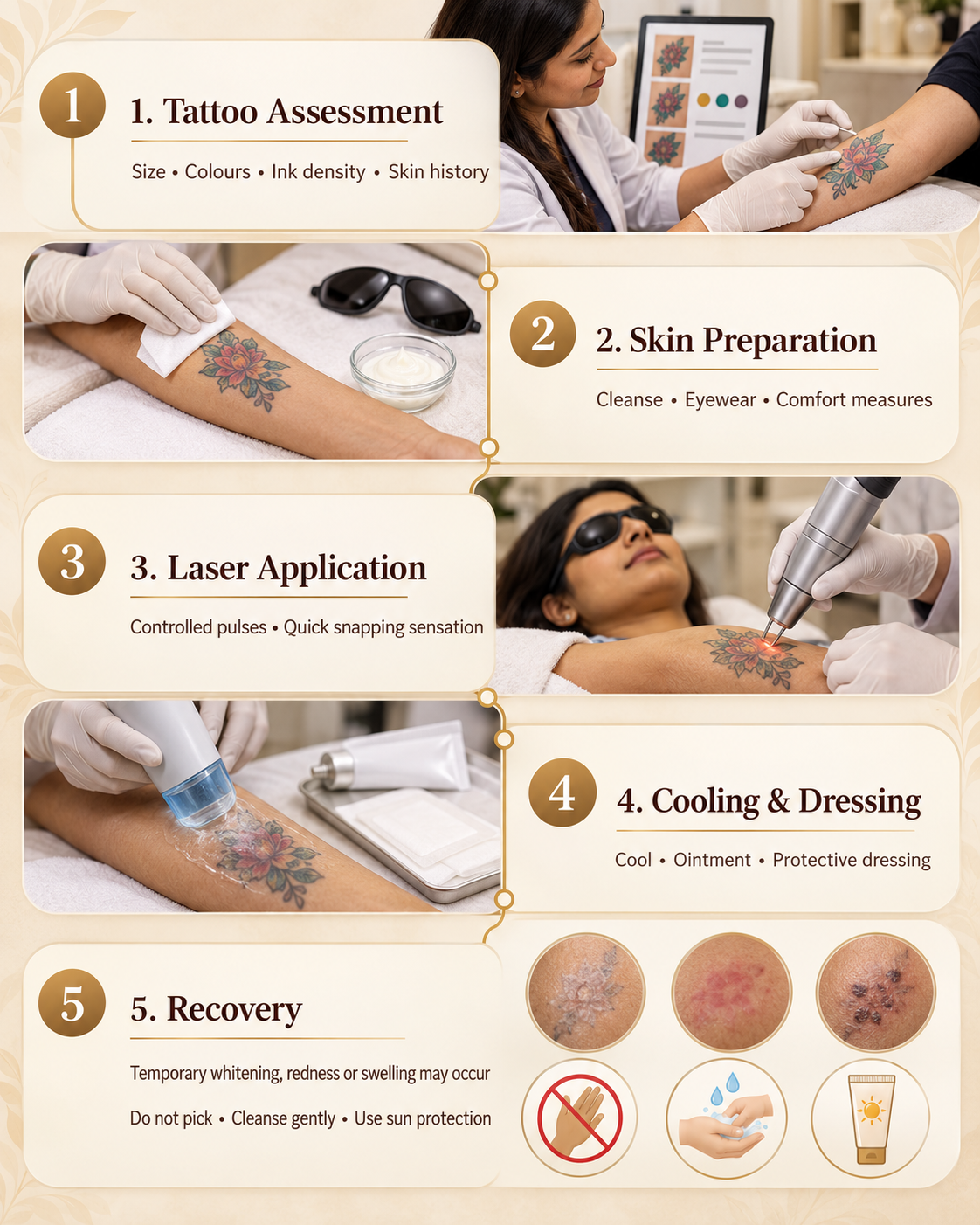
Assessment. The tattoo’s colour, depth, density and location are examined along with your skin tone and medical history.
Laser session. Controlled laser pulses are delivered over the tattoo using wavelengths and energy selected for the ink. Sensation is often described as a quick snap or sting.
Aftercare. Redness, swelling, crusting or blistering can occur. The area is kept clean and protected, and personalised aftercare is advised based on your skin response.
Review. Fading and skin recovery are reviewed before each following appointment.
Seek medical advice if you develop increasing pain, spreading redness, pus, fever or delayed healing after a session.
Factors That Affect Tattoo Removal Results and Number of Sessions
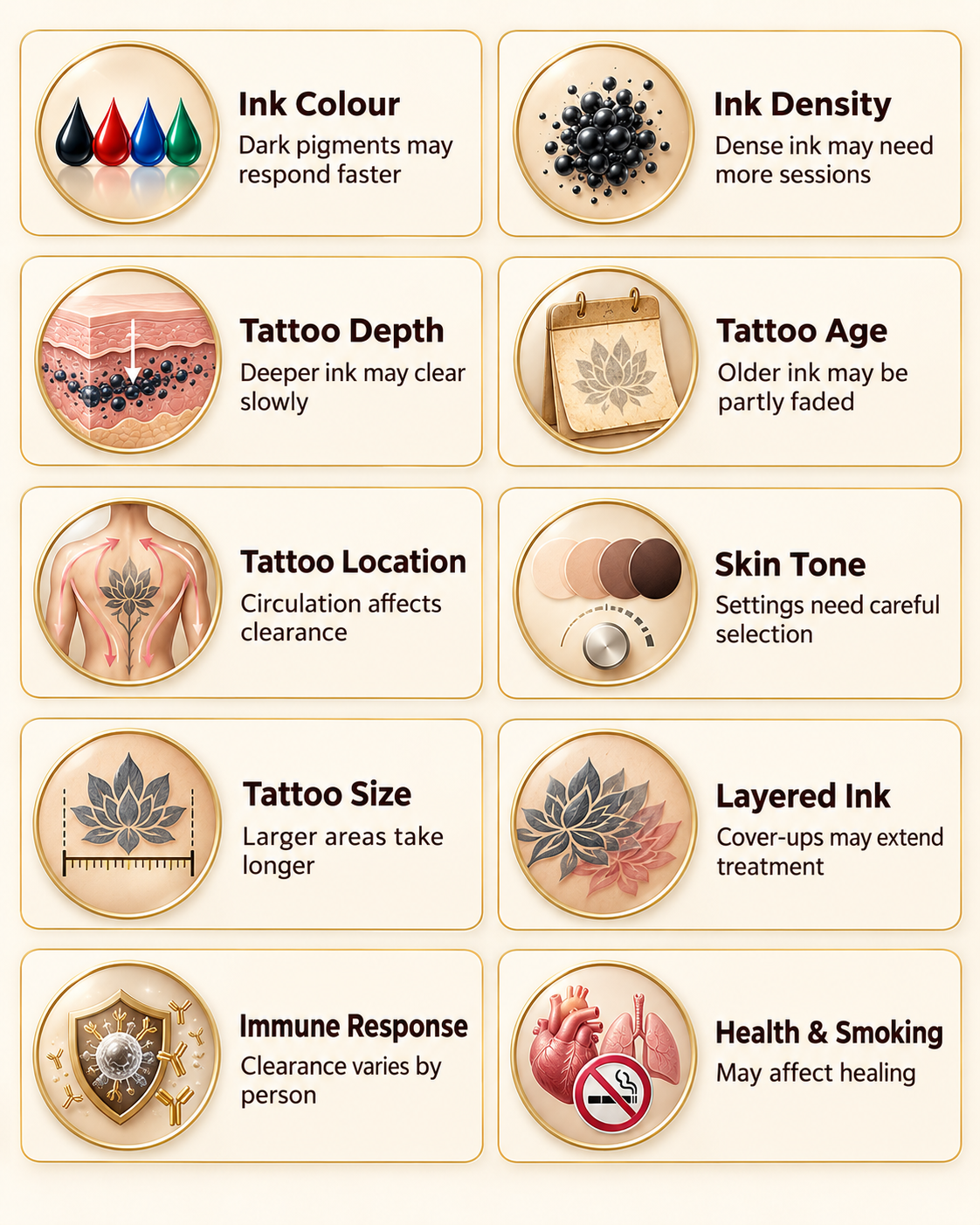
No fixed number of sessions applies to every tattoo. The treatment course may be influenced by:
- Ink colour and pigment density
- Depth of the ink in the skin
- Size and body location of the tattoo
- Age of the tattoo
- Professional, amateur or layered design
- Skin tone and healing response
Sessions are generally spaced several weeks apart. Treating the tattoo too frequently does not necessarily speed removal and can increase the risk of skin injury.
Progress should be reviewed before each appointment. Continue treatment only after the skin has recovered adequately.
Tattoo Removal Cost in Delhi: What Determines the Price?
The cost of tattoo removal in Delhi depends on the tattoo and treatment plan rather than one standard price. Factors affecting the estimate include:
- Size and surface area
- Number of ink colours
- Pigment density and depth
- Professional, amateur or cosmetic tattoo
- Body location
- Laser wavelengths required
- Number of sessions
- Need to divide a large tattoo into sections
- Previous removal attempts
- Aftercare requirements
A small black tattoo may require a different treatment plan from a large, multicoloured or layered design. The total cost can therefore be estimated more accurately only after examining the tattoo.
Ask for an assessment-based estimate instead of choosing treatment solely by a low per-session price. Correct technology and carefully selected settings are important for protecting the skin.
Tattoo removal requires an understanding of pigment as well as skin healing. Discover what guides Dr. Monisha Kapoor’s approach.
Why Choose Dr. Monisha Kapoor for Tattoo Removal in Delhi?
25+ Years of Experience in Aesthetic Care
Her experience across cosmetic and reconstructive procedures supports a detailed approach to skin-related concerns.
10,000+ Procedures Performed
Her broad procedural experience supports careful treatment selection and management of different skin responses.
Laser Treatment Experience
Experience with tattoo removal, laser toning and pigmentation procedures supports informed wavelength and energy selection.
Response-Based Adjustments
Laser parameters and session intervals are modified according to fading, skin recovery and pigment resistance.
Scar Management Expertise
As a plastic surgeon, Dr. Monisha Kapoor can evaluate raised scars, textural irregularities and skin damage associated with the tattoo or previous removal attempts.
Realistic Treatment Endpoint
Sessions are stopped when the desired fading has been achieved or further treatment is unlikely to produce meaningful improvement.

Start your tattoo removal journey with an expert evaluation of your tattoo and skin type. Get a customised treatment plan designed around your removal goals.
Frequently Asked Questions
1. Can a tattoo be removed completely?
Some tattoos fade substantially, but complete removal cannot be guaranteed. Residual pigment, a faint outline or skin-colour differences may remain.
2. How many sessions are required for tattoo removal?
The number varies according to colour, size, ink density, depth and body location. Professional and multicoloured tattoos often require more sessions.
3. What is the cost of tattoo removal in Delhi?
Cost depends on tattoo size, colour, density, location and the number of sessions required. A personalised estimate is provided after examination.
4. Does tattoo removal leave a scar?
Scarring is possible but is not expected in every case. Risk is influenced by aggressive treatment, infection, picking, previous tattoo scarring and individual healing.
5. Can coloured tattoos be removed?
Many coloured tattoos can be lightened, but different pigments may require different wavelengths. Some colours may not clear completely.