Book An Appointment 📞 Call Now
This website is being reviewed and updated in line with the National Medical Commission (NMC) guidelines on ethical advertising and public communication by registered medical practitioners.
Dr. Monisha Kapoor
  • Home
  • About Us
  • Treatments
    • Hair
      • Hair Transplant
    • Body
      • Liposuction
      • Six Pack Abs
      • Hour Glass Shape
      • Brazilian Butt Lift
      • Thigh Gap
      • Full Body Lift
      • Vaginal Revitalisation
      • Hand & Feet Revitalisation
      • Tummy Tuck
      • Breast Surgery
      • Male Chest Reshaping
      • Male Chest Reduction
      • Mommy Makeover
      • Men Makeover
    • Skin
      • Zein Obegi's Skin Treatment
      • Chemical Peels
      • Hydra Facial
      • Silk Peel
      • Pelleve Skin Tightening
      • IPL Foto Facials
      • Tri Active Deka Peel
      • Tattoo Removal
      • Laser Skin Toning
      • Laser Hair Reduction
      • Full Body Polishing
      • Halo BBL
    • Face
      • Acne Scar Treatment
      • Face & Neck Lift
      • Forehead
      • Neurotoxin and Fillers
      • Brows
      • Eyes
      • Nose
      • Cheeks
      • Lips
      • Chin
      • Face Bone Alteration
      • Dimple Creation
      • Face Thinning
      • Permanent Makeup
  • Resources
    • Facilities & Infrastructure
    • Media
    • Photos
    • Blog
    • Case Studies
  • Contact Us
+91-8860851727

Blog

Recent Posts

  • Is six pack abs surgery real and safe?
  • How long do you wear a compression garment after liposuction?
  • Liposuction vs weight loss injections: which is better for belly fat?
  • Can a bad nose job be fixed with revision rhinoplasty?
  • What is the best age for a nose job?

Archives

  • November 2026
  • October 2026
  • September 2026
  • August 2026
  • July 2026
  • June 2026
  • May 2026
  • December 2023
  • July 2023
  • April 2023
  • July 2020
  • June 2020
  • November 2019
  • August 2019
  • August 2018
  • April 2018
  • March 2018
  • January 2018
  • December 2017
  • October 2017
  • September 2017
  • July 2017
  • June 2017
  • April 2017
  • December 2016
  • November 2016
  • October 2016
  • September 2016
  • August 2016
  • July 2016

Is six pack abs surgery real and safe?

Is six pack abs surgery real and safe?
Posted on November 5, 2026November 5, 2026

Is six pack abs surgery real and safe?

Yes, six pack abs surgery is real, but it doesn’t build muscle. It uses a fine kind of liposuction, often called abdominal etching, to take fat from along the natural lines of your abdominal muscles so the muscles you already have look sharper. As for safety, it’s considered reasonably safe on the right person with a qualified surgeon, though like any surgery it carries risks.

According to Dr. Monisha Kapoor, a Plastic Surgeon in Delhi, “People hear six pack surgery and assume it builds muscle, and it doesn’t. We’re shaping the fat that sits over muscles you already have, which is why it only suits someone who is already fit and fairly lean. If a person hopes it will replace the gym, I’ll tell them honestly that it won’t.”

Is Six Pack Abs Surgery Real? How It Actually Works

  • It’s a liposuction technique, not a muscle operation. Fat is taken out in thin lines over the abdomen, which creates shadows where the divisions between your muscles would sit. The muscle itself isn’t touched.
  • Before the operation, the surgeon marks the muscle lines on your abdomen, because the whole result depends on where those lines fall.
  • Only a small amount of fat comes out. The aim isn’t a flatter belly like regular liposuction, but definition, so the work is fine and shallow.
  • Men usually get the classic six-pack pattern, while women often get a softer look with three vertical lines.

Because this is a refined form of liposuction, our page on liposuction in Delhi explains how fat removal works in general.

Is Six Pack Abs Surgery Safe? What to Know Before You Decide

  • It can be, in the right hands and for the right person. In a published study of 50 patients, researchers reported no major complications.
  • Smaller problems do happen. These include uneven contours, pockets of fluid under the skin called seromas, and changes in skin colour.
  • Not everyone is a good candidate. It works best if you’re already lean, your weight is steady and your skin has good elasticity. Someone with a lot of fat or loose skin may be better off with a different procedure.
  • The result depends on you afterwards. The look holds only with healthy eating and regular exercise, and putting on weight will blur the lines.

You can read what candidates and recovery look like in more detail on our six pack abs surgery page.

What Decides Whether Six Pack Abs Surgery Is Right for You?

  • How much fat you carry and whether your weight is steady. Surgeons prefer people who are close to their lowest comfortable weight.
  • Your skin. Good elasticity lets it settle neatly over the new lines.
  • Your habits. If you already eat well and train regularly, you’re in a better spot to keep the result.
  • Your general health. You need to be fit for anaesthesia, and smoking can slow down healing.
  • What you’re hoping for. This changes how your abdomen looks, not how strong it is, and it helps to be clear on that early.

Key Takeaways

  • Six pack abs surgery is real, but it only reveals the muscles you already have.
  • Is six pack abs surgery safe? It can be for the right person with a qualified surgeon, but risks still exist.
  • It suits people who are already lean, with steady weight and elastic skin.
  • The results need healthy eating and exercise to last.
  • A proper consultation will tell you whether you’re a good fit.

FAQs

  1. Does six pack abs surgery build muscle?
    No. It only removes fat in fine lines over the muscles you already have, so they look more defined. The muscle itself isn’t changed, and keeping it strong still depends on exercise.
  2. Is six pack abs surgery permanent?
    The fat cells taken out don’t grow back in that spot, but the ones left behind can still enlarge if you put on weight, and that blurs the lines. Staying at a steady weight with healthy eating and regular exercise is what keeps the look.
  3. Can women have six pack abs surgery?
    Yes. Women usually get a softer, more natural look, often with three vertical lines, instead of the full six-pack pattern. Your surgeon will plan the shape around your body.
  4. How long is the recovery after six pack abs surgery?
    It varies. Some surgeons allow light exercise that doesn’t strain the core after about two weeks and harder workouts after about four. Follow your own surgeon’s advice, because the timeline depends on how much was treated.

Disclaimer

The information shared in this content is for educational purposes and not for promotional use. It does not replace a consultation with a qualified doctor.

Reference Links

  • PubMed, Abdominal Etching: Surgical Technique and Outcomes: https://pubmed.ncbi.nlm.nih.gov/30921120/
  • NCBI Bookshelf (StatPearls), Liposuction: https://www.ncbi.nlm.nih.gov/books/NBK563135/
  • NIH MedlinePlus, Liposuction: https://medlineplus.gov/ency/article/002985.htm
  • World Health Organization, Physical Activity Fact Sheet: https://www.who.int/news-room/fact-sheets/detail/physical-activity
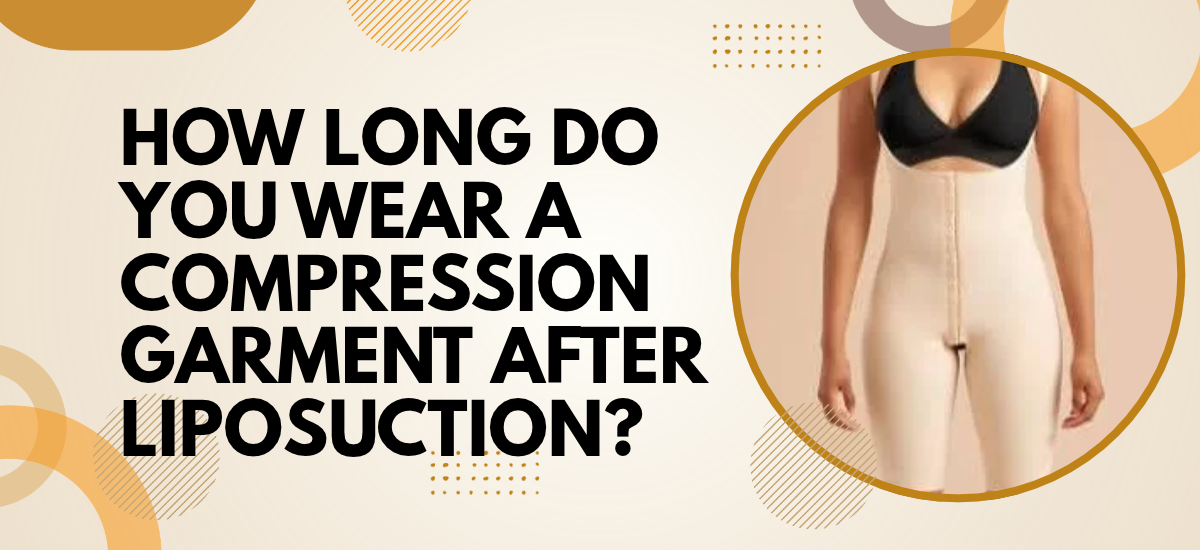
How long do you wear a compression garment after liposuction?

How long do you wear a compression garment after liposuction
Posted on November 5, 2026November 5, 2026

Expect to be in the garment for somewhere around 4 to 6 weeks. For the first two weeks it barely comes off, and after that you wear it for only part of the day. Some surgeons ask for longer, especially when several areas were treated. That’s the rough answer to how long to wear a compression garment after liposuction, though your surgeon sets the actual number for you.

According to Dr. Monisha Kapoor, a Plastic Surgeon in Delhi, “People tend to think of it as something tight you just put up with. It keeps the swelling down and helps the skin settle against the new shape, so it matters that you wear it properly in those first weeks. How long exactly depends on how much was treated and how your body is healing, which is why I check each patient instead of giving everyone the same number of weeks.”

Why Your Surgeon Wants You in a Compression Garment

  • Reduces swelling: Compression helps apply steady pressure, which may reduce fluid buildup after liposuction.
  • Supports skin healing: It helps the skin settle over the newly shaped area as it heals.
  • Improves comfort: The snug fit may make soreness and movement more manageable during recovery.
  • Proper fit matters: A garment that’s too loose may be ineffective, while one that’s too tight can cause discomfort or numbness. Your surgeon’s team can recommend the right size.

For more information, explore liposuction in Delhi and learn what to expect during recovery.


A Rough Timeline for Your Compression Garment After Liposuction

  • First 1–2 weeks: Keep the garment on most of the time, removing it only for bathing or when advised.
  • Weeks 3–6: Many patients can reduce wear to daytime use as swelling starts to settle.
  • After 6 weeks: Some may benefit from wearing it during the day for a few additional weeks.
  • After combined procedures: Recovery may take longer, so compression time can vary.

Every recovery is different, so your surgeon’s guidance should determine how long you wear the garment. Learn more about liposuction recovery

What Decides How Long You’ll Need It

  • How many areas were treated and how much fat was taken out. More areas usually means more weeks.
  • Your surgeon’s own habits. One surgeon is strict about full-time wear and another eases off sooner, and both can be perfectly reasonable.
  • How you’re healing. If the swelling is going down quickly, you may be allowed to cut back earlier.
  • Your skin. If it has lost some of its stretch, it can take longer to settle, and you may be asked to carry on a little longer.
  • Whether anything else was done at the same time.

Key Takeaways

  • About 4 to 6 weeks is the usual ask, and some surgeons go longer.
  • Expect to wear it nearly all day and night at the start.
  • There’s no single answer to how long to wear compression garment after liposuction. It shifts with the areas treated and how you heal.
  • Check with your surgeon before you cut back or stop.
  • A garment that hurts, goes numb or digs in needs a call, not patience.

FAQs

  1. Can I take off the compression garment to sleep?
    In the first few weeks, most surgeons want you to keep it on at night too, and you take it off only to shower. Later on, many people move to wearing it during the day alone. They’ll let you know when you can move to the next stage.
  2. Is it a problem if I stop wearing the compression garment early?
    It can be. Swelling may take longer to go down, fluid can collect under the skin, and the area might look a bit uneven while it settles. If you’ve already taken it off early, tell your surgeon rather than just carrying on.
  3. Can I wear normal shapewear instead of a surgical garment?
    Check with your surgeon first. Surgical garments are made to press evenly over the treated areas. Ordinary shapewear often doesn’t, and it can cut in at the edges or leave marks.
  4. Is it normal for the compression garment to feel tight?
    It should feel snug, like a firm hug, but it shouldn’t be painful. If your skin goes numb or tingly, you see deep marks, or the garment keeps rolling and digging in, give your surgeon a call. The size or fit may need changing.

Disclaimer

The information shared in this content is for educational purposes and not for promotional use. It does not replace a consultation with a qualified doctor.


Reference Links

  • PubMed The Use of Postoperative Compression Garments in Plastic Surgery: PubMed
  • NCBI Liposuction for Lipedema: 2022 Update: NCBI
  • WHO Obesity and Overweight: WHO


Liposuction vs weight loss injections: which is better for belly fat?

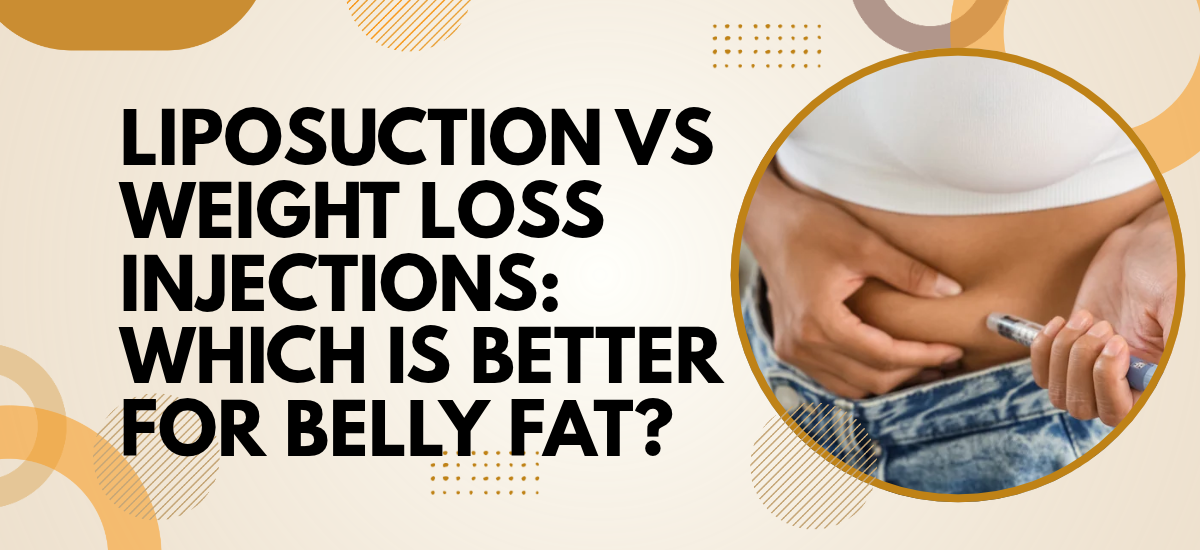
Banner comparing liposuction and weight loss injections as a belly-fat topic, with a close-up of abdominal injection circle on the right.
Posted on November 5, 2026November 5, 2026

Honestly, it isn’t a case of one beating the other, because they’re built for different jobs. When people compare liposuction vs weight loss injections, the injections bring your overall weight down, including the deeper fat packed around your organs, while liposuction takes soft fat out of specific spots to change your shape. Which one makes sense for belly fat comes down to how much weight you have to lose and what kind of fat it is.

According to Dr. Monisha Kapoor, a Plastic Surgeon in Delhi, “I wouldn’t call these two competitors at all. Injections work on your weight as a whole, while liposuction works on the shape of one particular area. So if a person has a lot of weight to lose, liposuction really isn’t where we begin. And if someone is already near their goal weight with one stubborn pocket, injections won’t reshape it.”

Not sure whether liposuction or weight loss injections are better for your belly fat? Get clear, personal guidance from Dr. Monisha Kapoor. Enquire Now

How Liposuction and Injections Each Deal With Belly Fat

  • Injections work on the whole body. Semaglutide and tirzepatide are the best-known ones, and they’re prescription medicines that cut down appetite, so the weight comes off gradually from all over. They need a doctor’s assessment and monitoring.
  • They reach different kinds of fat. Injections lower overall weight, which includes the deeper visceral fat around the organs. Liposuction only takes the soft, pinchable fat just under the skin, and the visceral fat deeper inside is out of its reach.
  • Liposuction changes shape, but it won’t make you much lighter. Only a limited amount of fat can be taken out of the areas you choose, which is why it tends to work best if you’re already close to your ideal weight.
  • Results last differently. Fat cells taken out by liposuction don’t come back in that area, but the ones left behind can still grow if you put on weight. After stopping injections, weight can come back without healthy habits. You can read how the procedure works on our liposuction page.

Liposuction vs Weight Loss Injections for Belly Fat: Which Fits You?

  • Near your goal weight, with just one stubborn pocket left. This is where liposuction is usually considered. It also helps to know how much fat liposuction can safely remove.
  • A lot of weight to lose, or health concerns linked to belly fat. Weight loss comes first, through a doctor-guided plan that may include injections. Liposuction isn’t a way to lose weight.
  • Many people end up needing both, in order. Weight comes down first, then it settles, and only then is contouring planned for any area that remains.
  • Loose skin after weight loss. Neither option tightens it. If the skin is left hanging after a big weight loss, that’s when a tummy tuck usually comes up.

What Decides Between Liposuction and Weight Loss Injections for You?

  • Your current weight. How far you are from your goal weight decides which one comes first.
  • The type of fat. Pinchable fat under the skin and deep fat around the organs are handled in different ways.
  • Your health and medicines. If you’ve got diabetes, say, or take regular tablets, that can change the plan, and your doctor needs to know all of it.
  • Your skin. Good elasticity helps after weight loss, while loose skin may need more than fat removal.
  • Your goal. Losing weight and changing shape are two separate aims.

Key Takeaways

  • Liposuction vs weight loss injections isn’t a contest, because one reshapes and the other reduces weight.
  • Liposuction can’t get at visceral fat, and an injection can’t be aimed at one spot.
  • These injections are prescription medicines, so a doctor has to be involved.
  • When it’s weight loss injections vs liposuction, the answer is often both: weight first, shape later.
  • Loose skin after major weight loss may need a separate procedure.

FAQs

  1. Weight loss injections vs liposuction: can one replace the other?
    Not really, because they do different jobs. Injections bring your whole body weight down but can’t be pointed at one area. Liposuction shapes a particular area, but it isn’t a way to lose weight.
  2. Does liposuction get rid of visceral belly fat?
    No. It only takes out the soft fat sitting just under the skin. Visceral fat lies deeper, around the internal organs, so liposuction can’t reach it. That kind of fat usually comes down with weight loss.
  3. Should I try weight loss injections or liposuction first?
    If you’ve got a lot of weight to lose, that comes first, and your weight needs to settle before anyone plans any contouring. Liposuction usually enters the picture once you’re near your goal weight and one area still won’t budge.
  4. Does belly fat come back after liposuction, or after you stop the injections?
    The fat cells removed during liposuction don’t return in that area, but the ones left behind can still grow if your weight goes up. And once you stop the injections, weight can creep back if healthy habits aren’t in place.

Disclaimer

The information shared in this content is for educational purposes and not for promotional use. It does not replace a consultation with a qualified doctor, and weight loss injections should only be used on a doctor’s prescription.

Reference Links

  • PubMed – Liposuction: A Review of Principles and Techniques: PubMed
  • PubMed – Liposuction and Its Role in Body Contouring: PubMed

Can a bad nose job be fixed with revision rhinoplasty?

Can a bad nose job be fixed with revision rhinoplasty?
Posted on November 5, 2026November 5, 2026

Yes,a bad nose job can often be fixed with rhinoplasty, though not always completely. Revision rhinoplasty is the second operation, done to sort out a shape or breathing problem the first one left behind. How far it can go depends on what actually went wrong, how much cartilage is still there to work with, and how much time has passed since the first surgery.

According to Dr. Monisha Kapoor, a Plastic Surgeon in Delhi, “A second operation is harder than the first one, honestly. There’s scar tissue, and the structure isn’t what it originally was, so you can’t predict things as easily. Which is why I don’t rush it. We wait for the nose to settle fully, understand what went wrong, and only then decide what can realistically be corrected.”

Why Some People Need a Second Surgery on Their Nose

  • Sometimes too much is taken off, sometimes too little. A bridge can end up looking scooped out, a tip can look pinched, or the bump you wanted gone slowly creeps back.
  • Breathing can get worse. If the inside of the nose was narrowed during surgery, you may find it harder to breathe than before, and that’s a medical problem, not just a cosmetic one.
  • Things can look uneven. Some of this only becomes obvious once the swelling goes down and the nose finally settles, which can take months.
  • And sometimes it’s simply how you healed. Two people can have the same surgery and end up with different scarring inside the nose, and that can change the shape slowly over time. A surgeon looks at all of this before planning revision rhinoplasty.

What Bad Nose Job Correction Can and Can’t Fix

  • What it can often improve. Most second surgeries are for the same handful of problems: a bridge that isn’t even, a tip that looks pinched or has dropped, a bump that was left behind, or a nose that won’t let you breathe properly.
  • Where the limits are. If too much cartilage was removed earlier, the surgeon may need to rebuild support using the patient’s own cartilage from another area, such as the ear or rib.
  • Small flaws sometimes need no surgery. For minor irregularities, fillers may be an option. Our comparison of surgical vs non-surgical nose job explains what they can and can’t do.
  • You’ll go through the usual checks again. A second operation still means anaesthesia, so your surgeon will want to be sure you’re fit for it. Here’s what medical tests are needed before plastic surgery.

What Decides Whether a Bad Nose Job Can Be Fixed?

  • What exactly went wrong. A nose that looks off, one that won’t let you breathe, and one that has partly collapsed are three very different problems, and each gets its own plan.
  • How much cartilage is left to work with. Less support usually means a more involved repair.
  • Time since the first surgery. Noses take their time. It often takes about a year before the swelling is fully gone and you can see the shape you actually have.
  • Your skin and scar tissue. Thick skin or heavy scarring can limit how much the surgeon is able to reshape.
  • What you’re hoping for. Revision surgery aims for a better nose, not the one you had before the first operation, and it helps to hear that early.

Key Takeaways

  • Revision rhinoplasty can often help, but how much depends on your own anatomy.
  • Give it about a year so the swelling can settle before a second surgery is planned.
  • A second operation is usually harder than the first.
  • Fillers may help with small irregularities but can’t rebuild structure or fix breathing.
  • Bad nose job correction starts with an honest look at what’s actually possible.

FAQs

  1. How long should I wait before revision rhinoplasty?
    Usually about a year. That gives the swelling time to go down so the real shape of the nose shows up. If there’s a breathing problem or some complication, the surgeon may step in sooner, but that is decided after an examination.
  2. Is revision rhinoplasty harder than the first surgery?
    Generally, yes. The scar tissue and the changes left by the first operation make the anatomy harder to predict, so the surgeon needs to plan carefully and assess your nose thoroughly before starting.
  3. Can fillers be used for bad nose job correction?
    Sometimes, for small things. Fillers can smooth a minor irregularity, but they only last a while. They can’t replace cartilage that is missing, and they won’t fix a breathing problem. That usually takes surgery.
  4. Will revision rhinoplasty bring back my original nose?
    Not exactly. The aim is to improve how your nose looks and works with whatever structure is left, not to recreate the nose you had before the first surgery.

Disclaimer

The information shared in this content is for educational purposes and not for promotional use. It does not replace a consultation with a qualified doctor.


Reference Links

  • PubMed – Nasal Growth and Maturation Age in Adolescents: PubMed
  • PubMed – Nasal Surgery in the Younger Patient: PubMed

What is the best age for a nose job?

What is the best age for a nose job
Posted on November 5, 2026November 5, 2026

People ask about the best age for a nose job all the time, and the short answer is 18, give or take, as long as the nose has stopped growing. Girls tend to get there around 15 to 17 and boys a little later, somewhere between 17 and 19. Even so, most surgeons in India would still rather wait until you’re 18 before doing a cosmetic nose job. After that there’s no real cut-off, and plenty of people have it done in their 20s and 30s.

According to Dr. Monisha Kapoor, a Plastic Surgeon in Delhi, “Age on its own is never the deciding factor. I look at whether the nose has finished growing and whether the person is clear about why they want surgery. A nose that is still developing can keep changing after an operation, so waiting a little gives us a stable base to plan from.”

Why Age Matters Before a Nose Job

  • The nose keeps changing for longer than most people think. Bone and cartilage are still developing through the teens, and if a surgeon reshapes a nose that’s still on the move, it can look different a few years later from what was planned. That’s the whole reason anyone talks about an ideal age for rhinoplasty.
  • Girls and boys don’t follow the same clock. Girls usually finish a year or two earlier, which is why one surgeon might say 16 and another 18. The best age for rhinoplasty can’t be pinned to a single birthday.
  • Then there’s the face around it. A nose gets judged against the chin, the cheeks and the lips. If your face is still filling out, the nose you planned at 15 may not suit the face you have at 19.
  • Not sure you want surgery yet? If you’re 18 or older, fillers can smooth out a small bump for a few months, but they won’t make a nose smaller. You can read more on our neurotoxin and fillers page.

Best Age for Rhinoplasty at Different Life Stages

  • Under 18: Most surgeons will tell you to wait. The exception is a breathing problem that needs fixing, and even then it’s decided after an examination, with your parents involved.
  • 18 to 25: This is the most common window. Growth is complete, and most people have thought the decision through. Many also find it easy to plan recovery around studies or a first job.
  • 26 to 35: Still a very comfortable time for surgery. Before planning anything, it helps to know what medical tests are needed before plastic surgery.
  • 36 and above: There’s no fixed upper limit. General health and realistic expectations count for more than the number. If you only want a small change, read our comparison of surgical vs non-surgical nose job. And if an earlier nose job didn’t turn out the way you hoped, that’s a separate conversation about revision work.

What Determines the Right Age for a Nose Job?

  • Whether the nose has finished growing. Your surgeon will check by examining you and asking things like whether you’ve grown taller in the last year.
  • Why you want it done. It could be looks, breathing, or both. If you can’t breathe properly through one side, the timing may not be able to wait.
  • Your general health. You need to be fit for anaesthesia, and if you smoke, say so, because it can slow down healing.
  • Whether you’re ready in your head. Surgery changes your nose, not your life, so it helps to know exactly what you want to change and why.
  • The nose itself. Skin thickness and how strong the cartilage is end up mattering more to the plan than the number on your birth certificate.

Key Takeaways

  • Eighteen is the usual starting point, once the nose has stopped growing.
  • Girls often finish earlier than boys, but most surgeons still wait for 18.
  • Under 18, it’s usually a breathing problem that opens the door, not looks.
  • There’s no strict upper age limit. Health and expectations decide.
  • An age chart only goes so far. A proper consultation will tell you more.

FAQs

  1. Is 18 the minimum age for a nose job in India?
    There isn’t one rule that covers everyone, but most surgeons would rather wait until you’re 18. By then the nose has usually stopped growing and you can make the decision yourself. Under 18, each case is looked at individually, and parents are involved.
  2. Can a 16-year-old have rhinoplasty?
    Some girls have almost stopped growing by 16, but boys often need another year or two. Most surgeons will still ask you to wait. The one exception is a breathing problem, and that is decided only after the surgeon has examined you.
  3. Is it too late for a nose job at 30 or 40?
    Not at all. Rhinoplasty doesn’t come with an upper age limit. At 30, 40 or later, what matters is how healthy you are, what your nose is like structurally, and whether you know what you want out of the surgery.
  4. Does age affect rhinoplasty results or recovery?
    A little. Age can change how tissue heals, but it’s only part of the story. Skin thickness, the structure of your nose, any health conditions and how well you follow aftercare count just as much. Your surgeon can tell you what to expect for your own nose.

Disclaimer

The information shared in this content is for educational purposes and not for promotional use. It does not replace a consultation with a qualified doctor.

Month: November 2026

Recent Posts

  • Is six pack abs surgery real and safe?
  • How long do you wear a compression garment after liposuction?
  • Liposuction vs weight loss injections: which is better for belly fat?
  • Can a bad nose job be fixed with revision rhinoplasty?
  • What is the best age for a nose job?

Archives

  • November 2026
  • October 2026
  • September 2026
  • August 2026
  • July 2026
  • June 2026
  • May 2026
  • December 2023
  • July 2023
  • April 2023
  • July 2020
  • June 2020
  • November 2019
  • August 2019
  • August 2018
  • April 2018
  • March 2018
  • January 2018
  • December 2017
  • October 2017
  • September 2017
  • July 2017
  • June 2017
  • April 2017
  • December 2016
  • November 2016
  • October 2016
  • September 2016
  • August 2016
  • July 2016
Footer – Dr. Monisha Kapoor
Plastic Surgeon · Delhi NCR
Dr. Monisha Kapoor

Dr. Monisha Kapoor

M.Ch. Plastic Surgery  ·  25+ Years of Practice  ·  10K+ Procedures

About

A practice built on precision. Board-certified plastic surgeon affiliated with the International Society of Aesthetic Plastic Surgery and the American Society of Aesthetic Plastic Surgery. Every consultation begins with listening — and every outcome is designed around your anatomy, your goals, and your vision of yourself.

Navigation

  • Dr's Desk
  • Facilities & Infrastructure
  • Blog
  • News & Updates
  • Career
  • Contact
  • Privacy Policy

Contact

18, Block J, Saket
New Delhi – 110017
011-40666307 / 08
+91 83739 84777
+91 8860851727
plasticsurgeonmonisha@gmail.com
Follow Connect

Disclaimer: The information on this website is provided for informational purposes only and is not meant to substitute the advice of your doctor or other healthcare professional. You should not use this information for diagnosing or treating a health problem or disease, or prescribing any medication. All images used are for illustrative purposes only; actual results and process may vary.

© 2026 plasticsurgeonmonisha.com All Rights Reserved

    Doctor

    Dr. Monisha Kapoor

    Delhi's Top Plastic Surgeon


    25+ Years Experience

    10,000+ Happy Customers
    Hair, Skin, Body, Face

    Book An Appointment

    WhatsApp
    HiHello 👋, welcome to Dr. Monisha Kapoor Aesthetics
    Can we help you?
    Open Chat
    Powered by Joinchat