
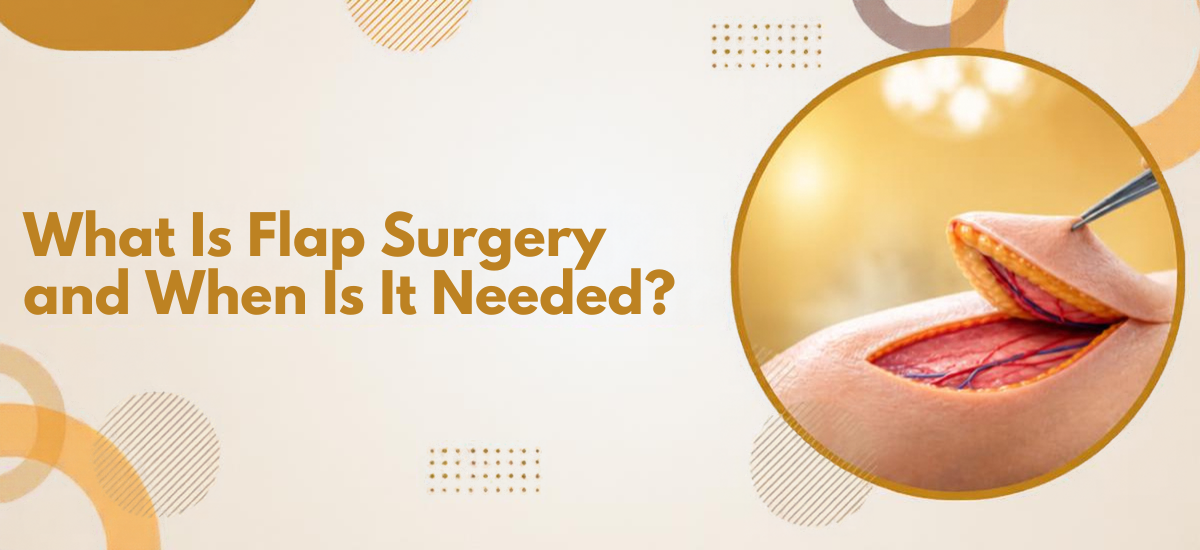
Flap surgery moves healthy living tissue, along with its own blood supply, from one part of the body to another to rebuild a defect. It’s needed when a wound is too deep, too exposed or too poorly supplied with blood for a skin graft to survive. Bone, tendon or a joint showing? That’s flap territory. Grafts need a blood supply underneath them. Flaps bring their own.
According to Dr. Monisha Kapoor, a trusted plastic surgeon in Delhi, “A graft is a patch, a flap is living tissue on the move, and picking the wrong one is where most reconstructions quietly fail.”
Dealing with a wound that won’t close, or exposed tissue that skin alone can’t cover? Book a Consultation
How Does Flap Surgery Actually Work?
A flap keeps its blood vessels attached, so the tissue stays alive while it moves. That’s the whole trick.
- Pedicled Flaps: Tissue stays tethered to its original blood supply and swings over to the defect like a hinge. Reliable, but only as far as the tether reaches.
- Local Tissue: Borrowing skin from right beside the wound? Colour and texture match better than anything taken from elsewhere.
- Free Flaps: Fully detached, then reconnected under a microscope, with vessels stitched to vessels barely wider than a thread. Hours of work, and it shows.
- Muscle Cover: Sometimes skin isn’t the point. Muscle carries bulk and blood, and it fills deep wounds that skin never could.
Flap choice depends on defect size, depth and location, and every flap leaves a donor site scar somewhere. So once things heal, skin treatment can even out leftover colour and texture differences.
When Is Flap Surgery Needed?
Flaps get chosen when a graft can’t survive or can’t do the job. Not before.
- Exposed Structures: Bone, tendon or hardware showing through a wound won’t accept a graft, because grafts need a healthy bed to live on.
- Deep Burns: Burn over a knuckle or elbow? A graft alone tends to tighten and fail there, so flap cover often takes over.
- Pressure Sores: These keep coming back unless bulky, well-supplied tissue replaces what died.
- Cancer Removal: Once a tumour’s out and a large gap remains, a flap rebuilds what was taken so the area still works and looks right.
The decision comes down to blood supply, not appearance. And once a flap settles, questions about scar treatment come up almost every time.
Why Choose Dr. Monisha Kapoor?
Dr. Monisha Kapoor is MCh-qualified in plastic and reconstructive surgery, with over two decades in practice. Flap planning is judgement work, and she’s done enough of it to know when a graft will do and when it won’t.
Patients get a straight answer on which option fits, and why. No upselling a bigger operation than the wound needs. Wound not closing, or something exposed? Don’t sit on it.
📞 Call Now: +91 83739 84777
FAQs
Is flap surgery the same as a skin graft?
No, flaps carry their own blood supply while grafts don’t.
How long does flap surgery take?
Simple local flaps take about an hour, free flaps can take several hours.
Will a flap leave a scar?
Yes, at both the reconstructed area and the donor site.
Can a flap fail after surgery?
Rarely, but poor blood flow in the first days can compromise it.